Featured custom build · 2013
Andrew Dice Clay’s OPS.
Dice once called himself a rock and roll comedian. That was enough for me. I built the guitar around the part of him everyone recognized, black leather, metal studs and stage attitude, then tied it back to the quieter person underneath with details that were completely personal to him.
The idea
A guitar for the character, built for the person.
The idea started after I read Andrew Dice Clay describe himself as a rock and roll comedian. I used to do standup in the late 1990s and early 2000s, so comedians do not usually go past my radar.
A lot of people do not know that Andrew is a drummer, and his son plays guitar. Music is in his blood, but it is usually overshadowed by the comedy and the character of Dice, which came from his middle name, Andrew Clay Silverstein.
He did not give me a drawing or a list of instructions. He trusted my artistic vision. I took what I knew about him and his image, then tried to build something that would look completely natural if he ever carried it onstage.
The leather
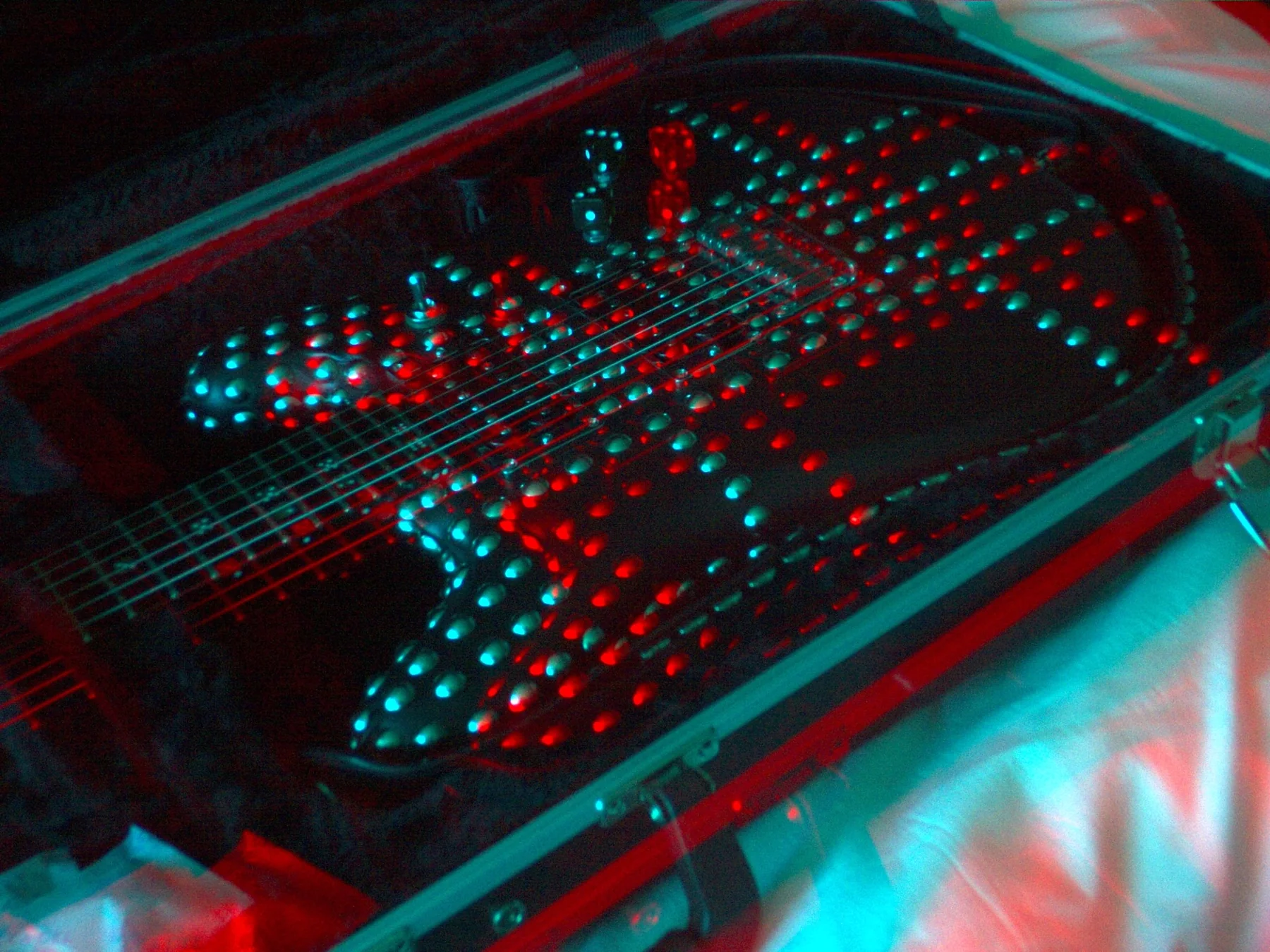
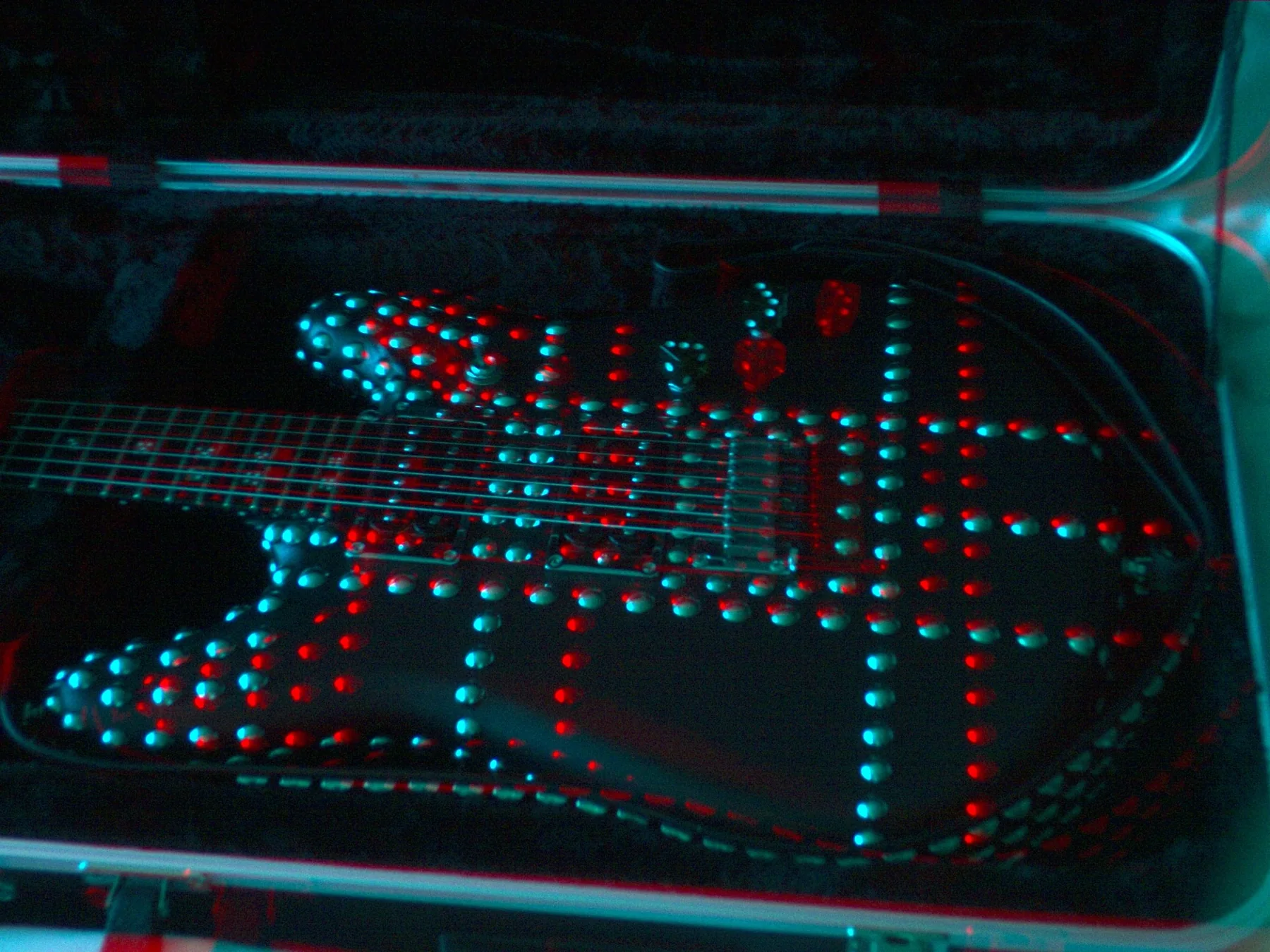
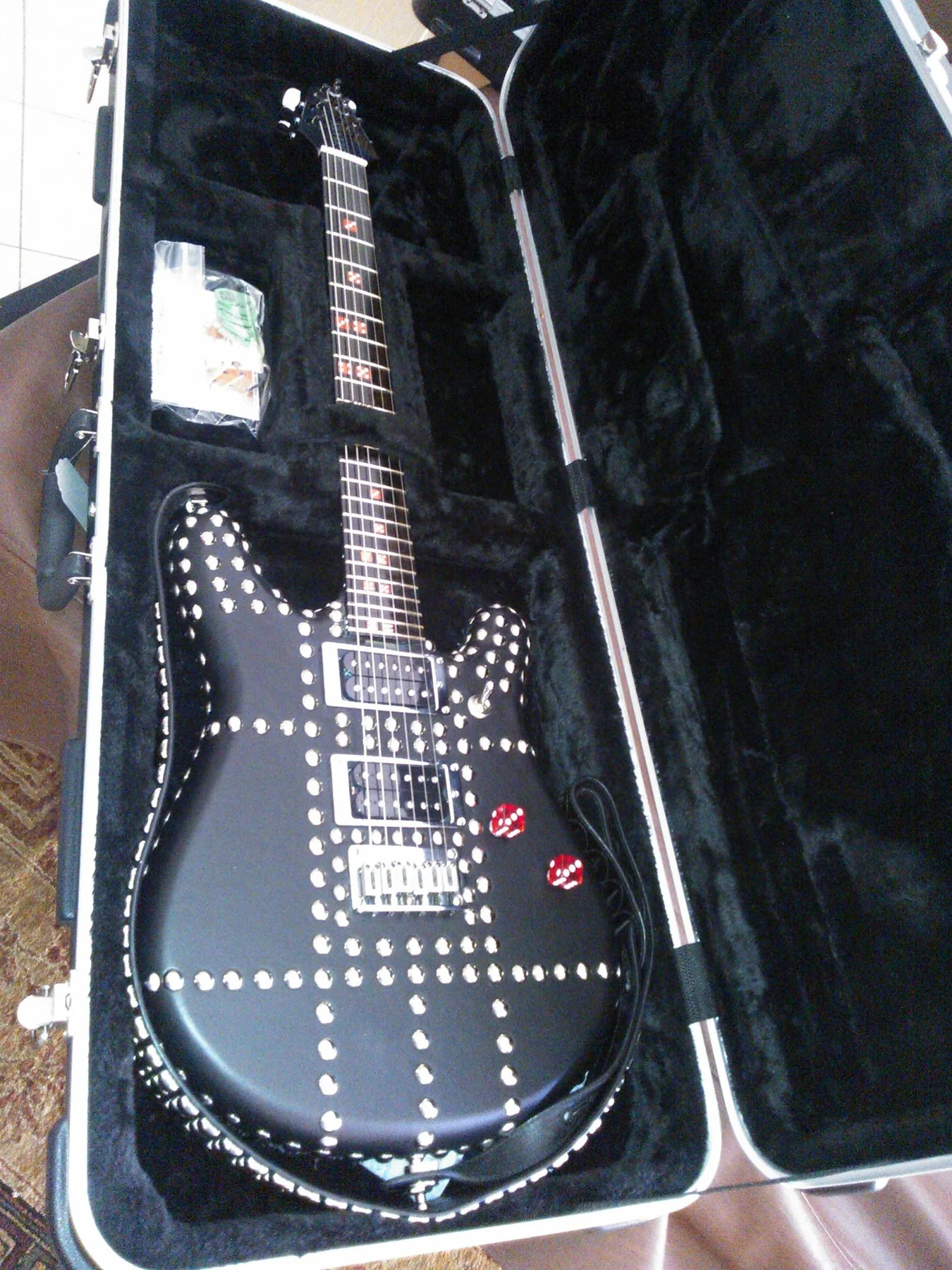
I wanted it to look like one of his jackets became a guitar.
I decided to start with one of my OPS guitars and wrap it in black leather. That sounded easier than it was.
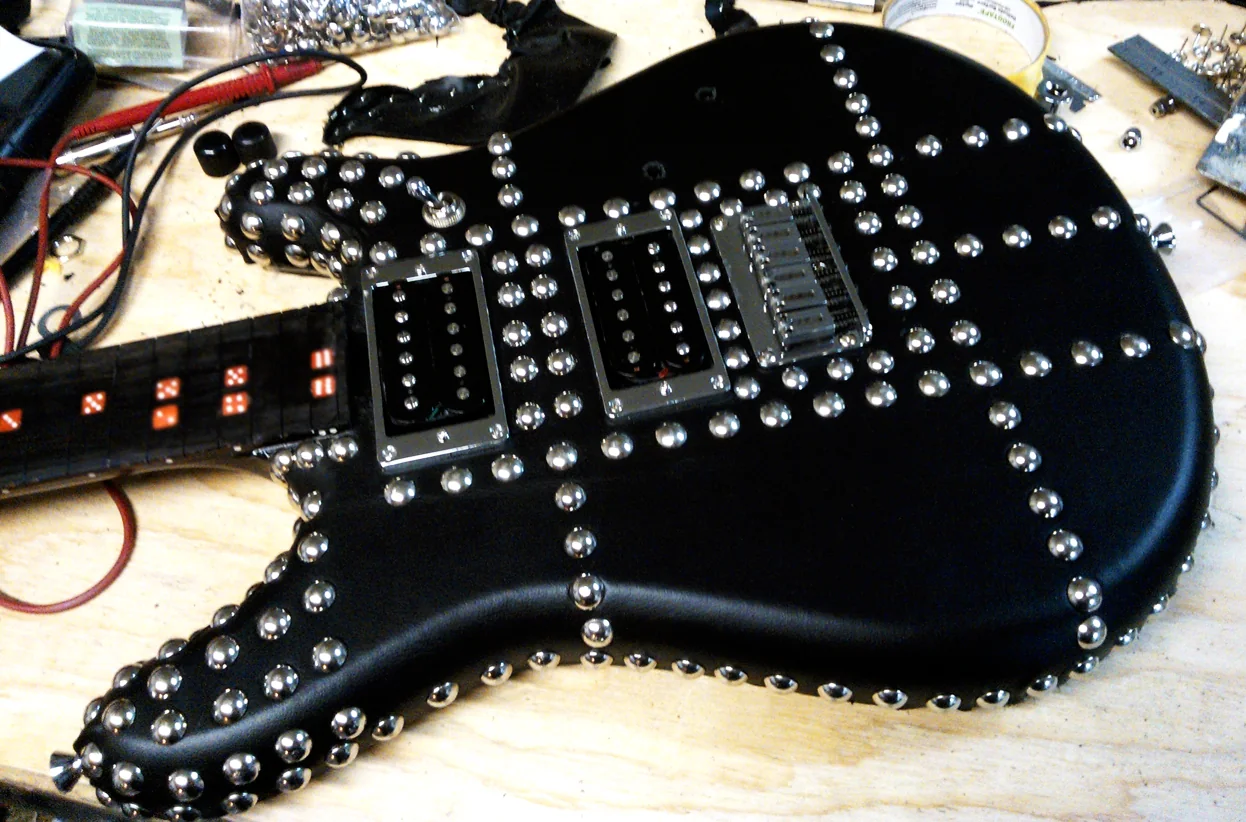
A guitar body is all curves, cavities, horns, edges and transitions. Leather has no interest in following any of them. I had to learn enough leather work to stretch it, shave it, heat it, steam it and pull it tightly around the body without making the guitar look like someone had upholstered it.
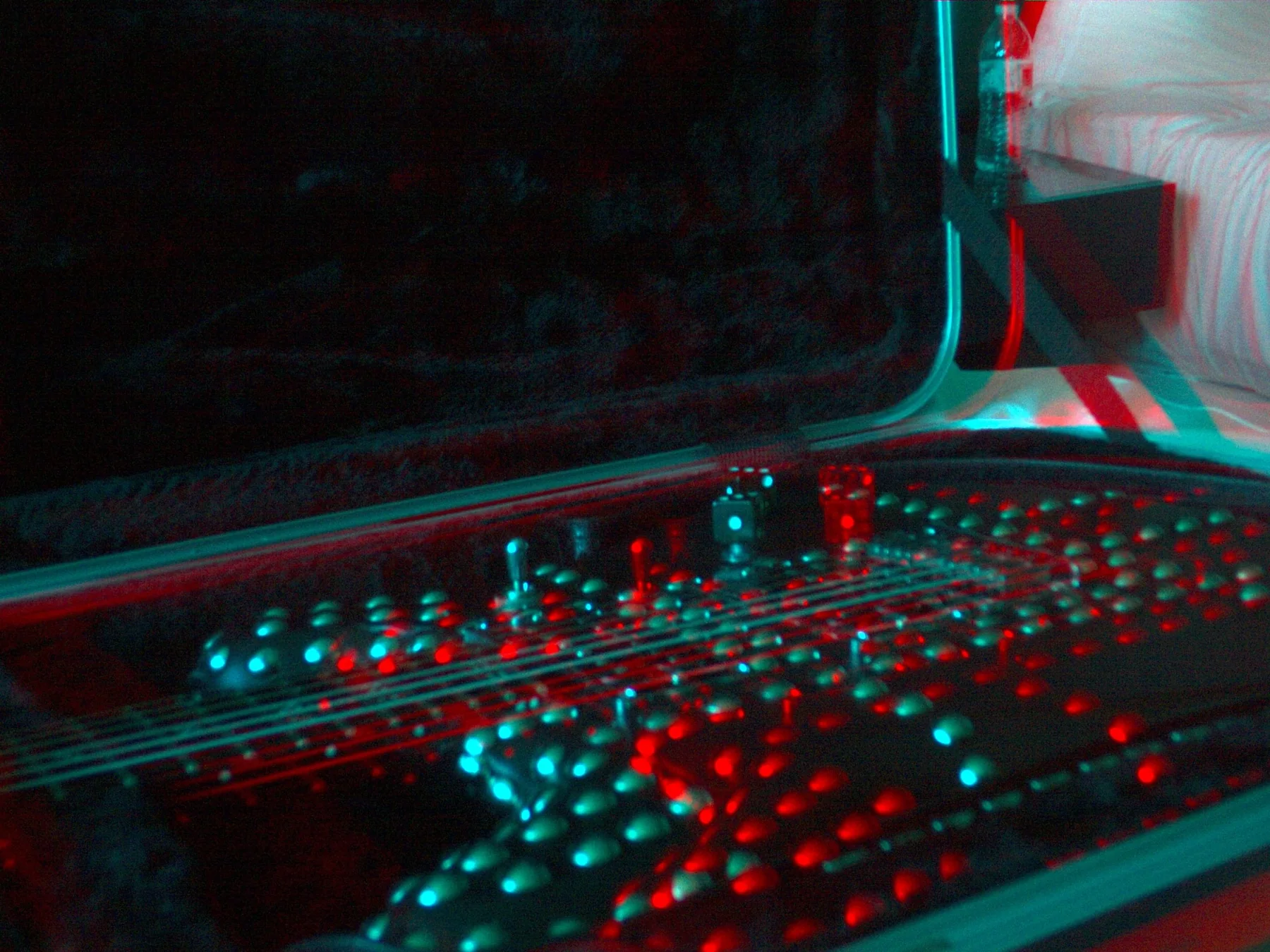
Then came the studs. I assumed that would be the easy part. It was not. Every stud had to be placed without running into wiring or one of the cavities hidden underneath. They were closer to decorative thumb tacks than normal guitar hardware, so I had to keep track of everything below the surface while building the pattern above it.
Why 1957 mattered
He was born in 1957, so the color came from a 1957 Chevy.
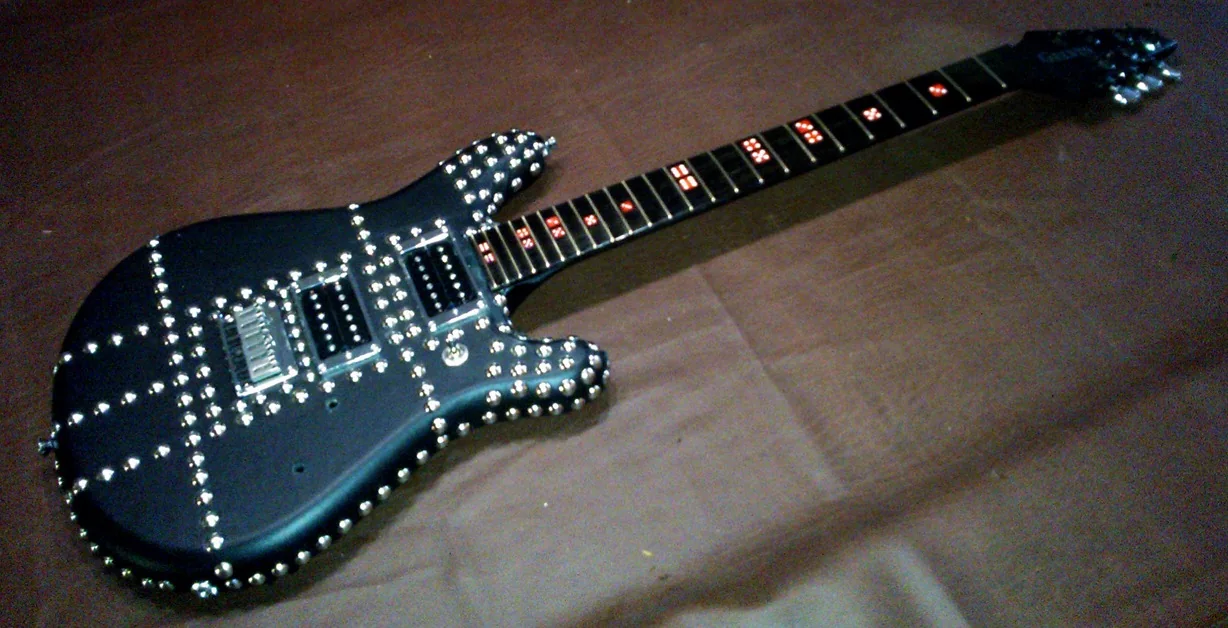
Andrew was born in 1957. I wanted the color to reach back to that year, and what says 1957 more clearly than a Chevrolet? The black used on the guitar was matched to the black used on a 1957 Chevy.
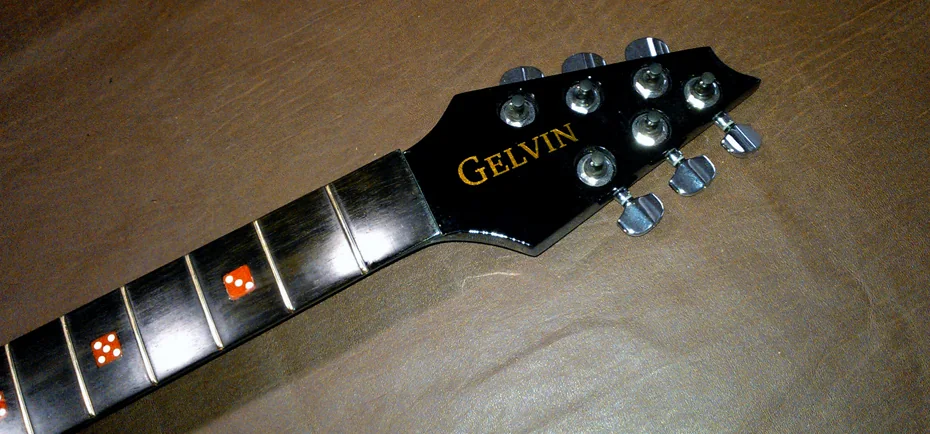
The fret markers were cut from actual dice. I sliced them into pieces about 2 millimeters thick and used the numbered faces as inlays. That was one of the hardest parts of the build. Cutting something that small accurately without a milling machine gives you very little room for error, or fingers.
The instrument
The appearance was theater. The guitar underneath was not.
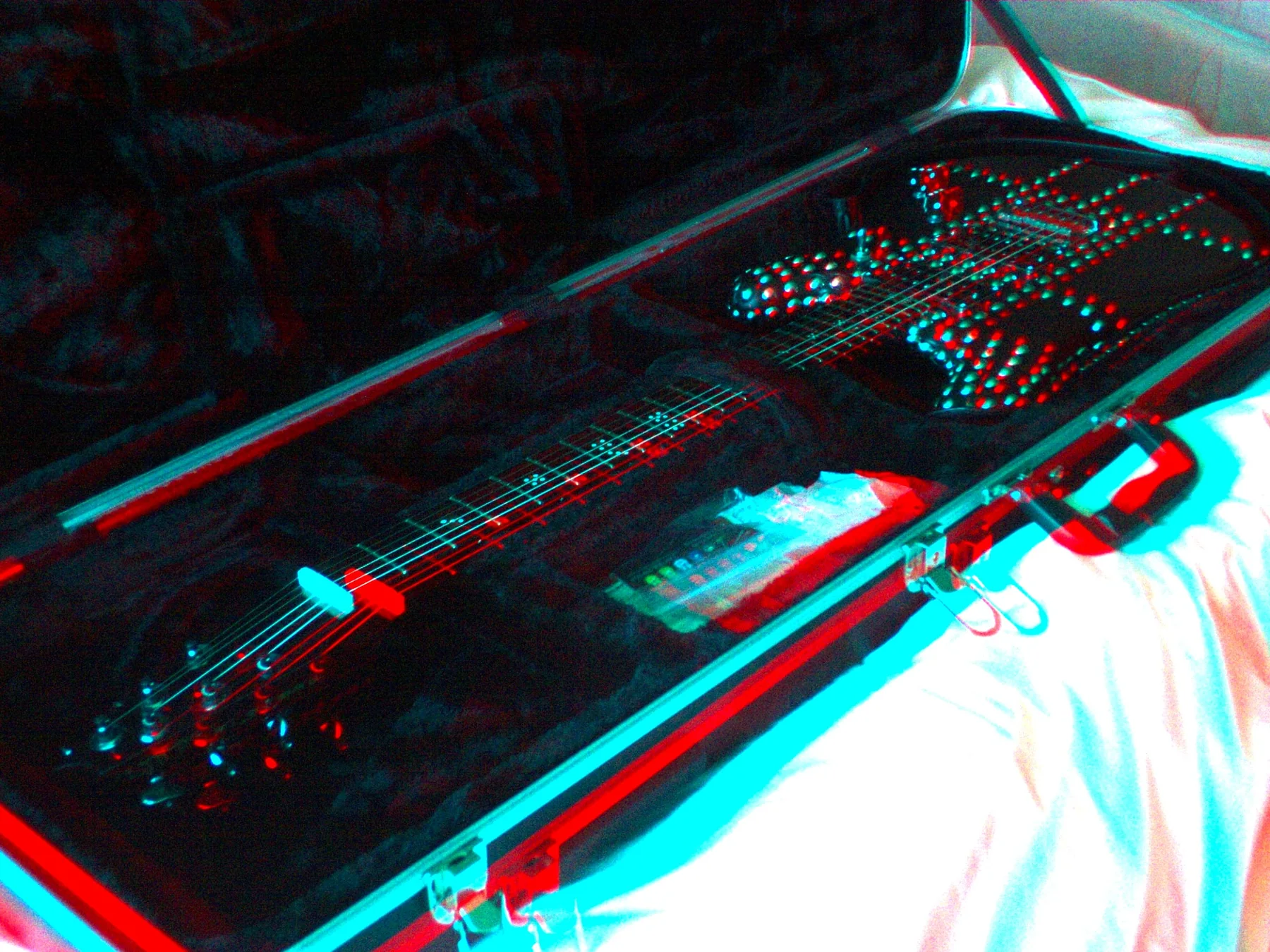
The entire guitar was mahogany except for the ebony fretboard. It carried my 2359 pickup set, which I designed to replicate the character of a Gibson PAF. The name came from February 3, 1959, the day the music died. Beneath the leather, studs and dice, it was still a serious instrument built to sound like one.
By the time it was finished, I felt like I had pulled off the task. The guitar matched the public image without looking like a costume piece that happened to have strings on it.
Meeting Dice
The character walked onstage a few minutes later.
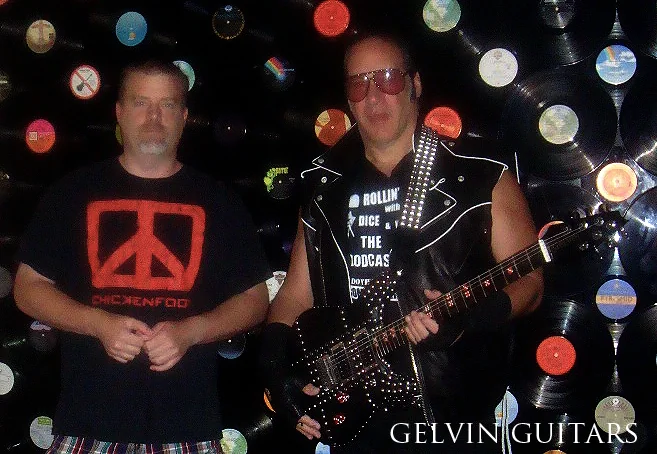
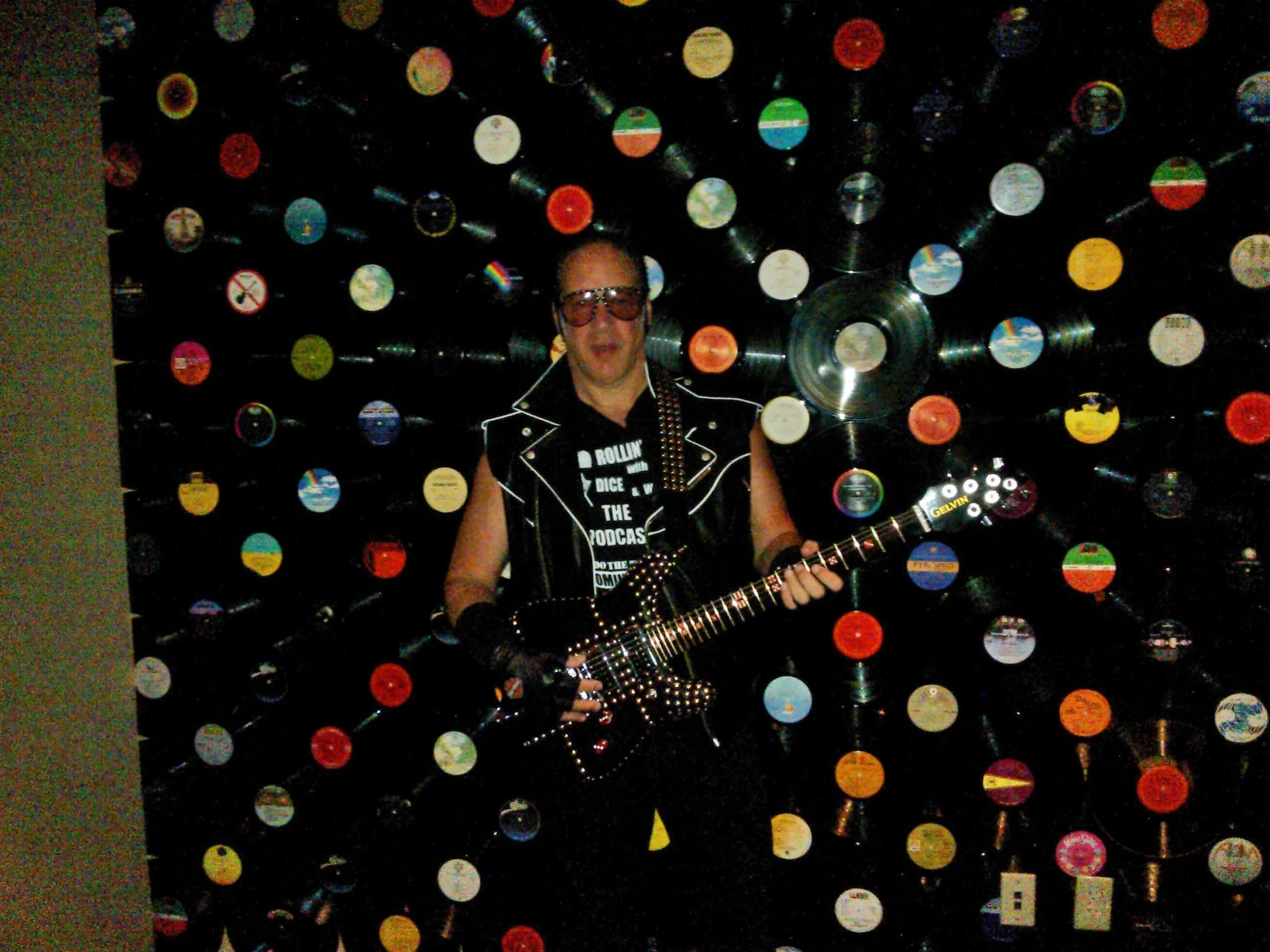
My wife and I went to the Hard Rock in Las Vegas to deliver the guitar before one of his shows. We met Andrew and his wife in the green room.
I may ruin part of the public image here, but Dice was one of the nicest and most soft spoken people I had met. The person onstage is an alter ego. It is not how he acts when the lights are off. His wife was very kind and did much of the talking. I hate to say it, but Dice almost seemed shy.
I explained how the guitar worked and how I made it. His response was, “I can’t believe you did this.”
He seemed moved and taken back by it, almost like he was not used to people doing something that personal for him. He was getting ready for the show, so I told him I understood that he had to get into character and that we would be watching.
A couple of minutes later, he walked onstage and became a completely different person.
We enjoyed the show, then got shirts and autographs afterward. The guitar was designed around the larger than life version of Dice, but delivering it introduced me to the quieter person underneath it.
The 3D photographs
I was also experimenting with 3D advertising.
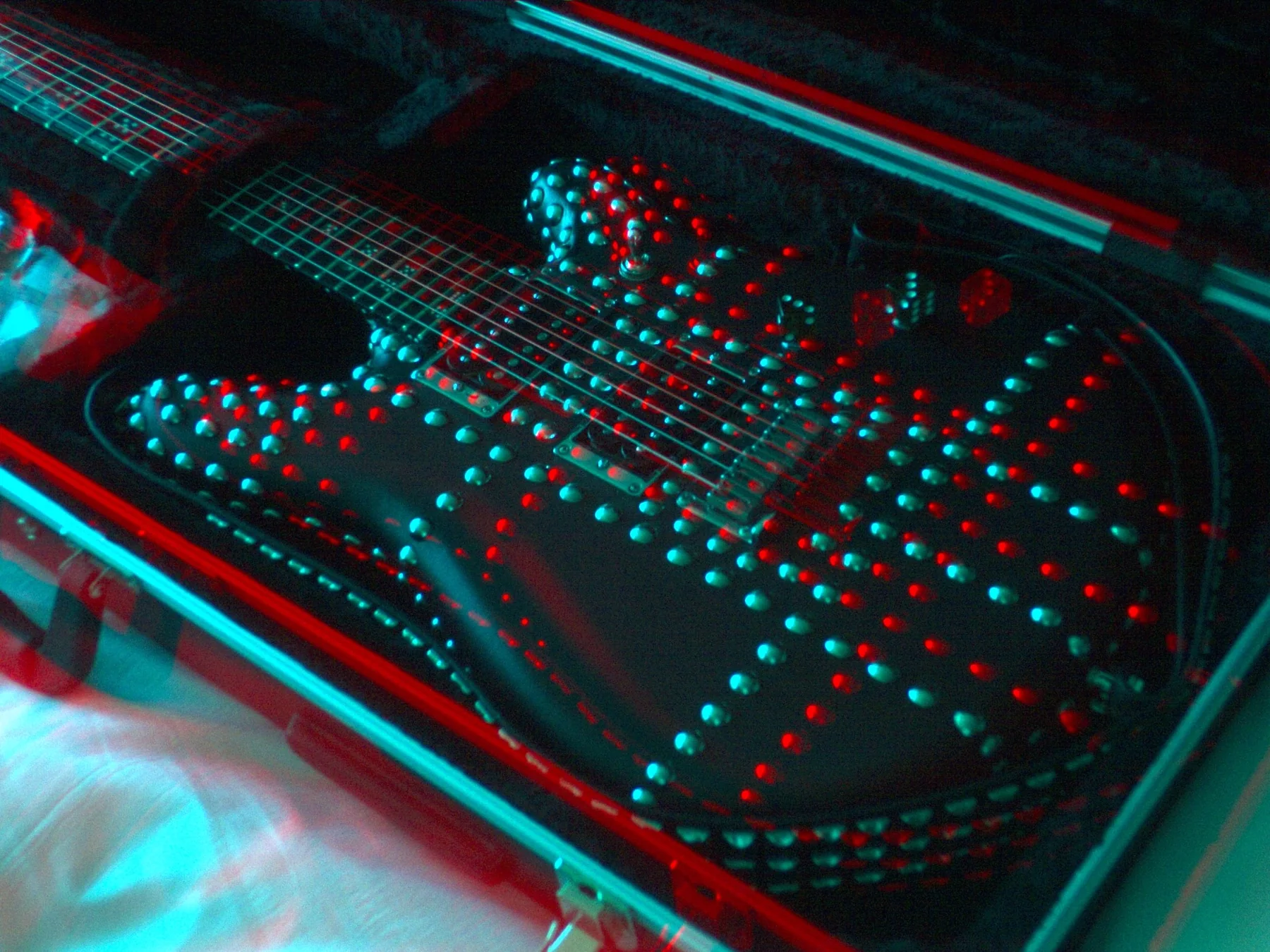
Some of the photographs from this project use a red and cyan 3D effect. At the time, I was experimenting with stereoscopic advertising. Viewed through traditional red and blue glasses, the doubled images separate and create the illusion of depth.
Other examples from that experiment are still in the Gelvin Guitars gallery. Not every experiment becomes a permanent advertising method, but that never stopped me from trying one.