Featured custom build · Around 2015
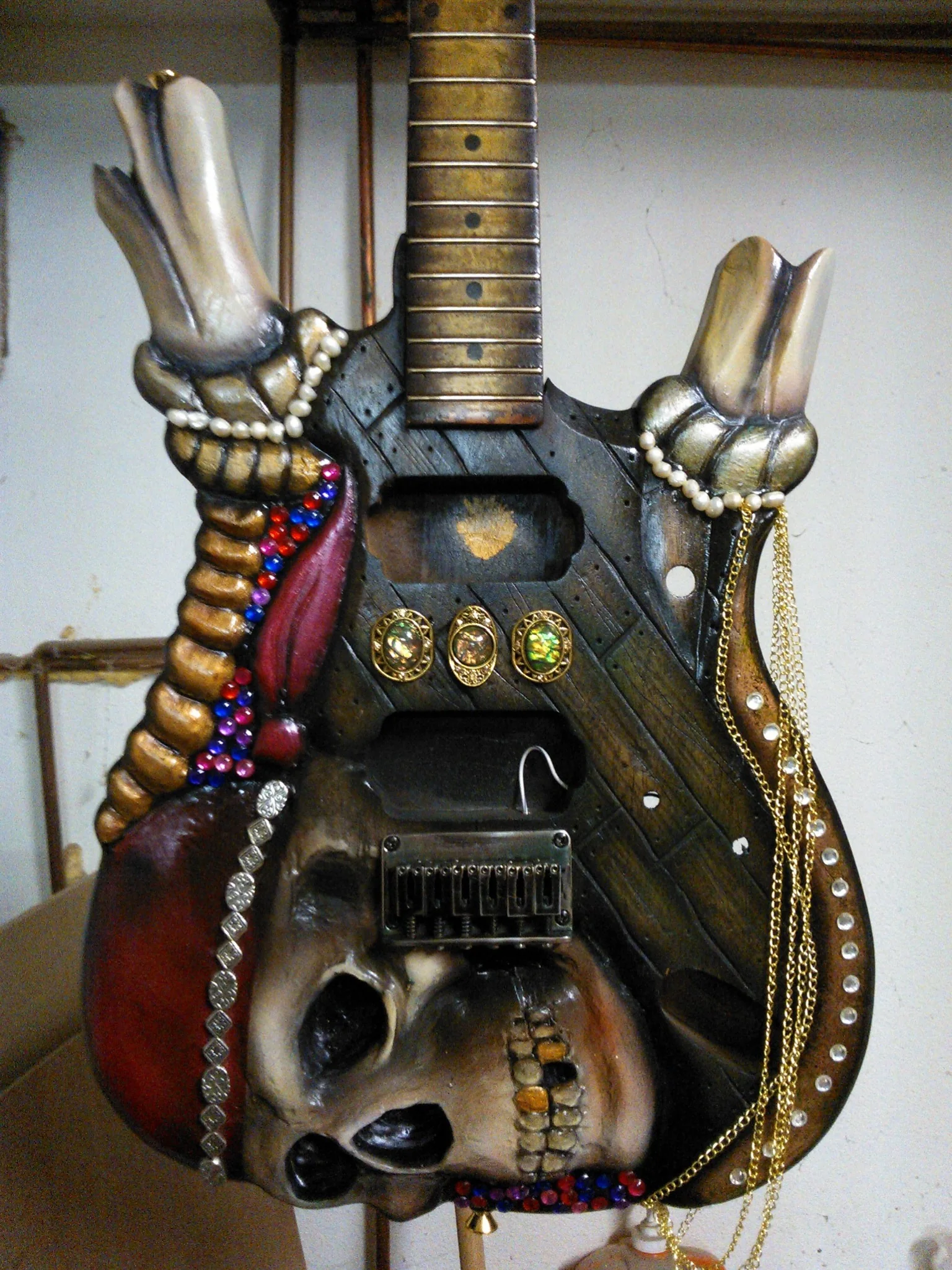
The pirate guitar built for Jack Russell.
It began years earlier with scrap wood, ugly carvings and guitars I freely admit were junk. Those early abominations were not Gelvin Guitars. They were how I paid for better materials—and, without knowing it, how I learned enough carving to build a skull-covered pirate guitar for the stage.
The ugly training years
Before Gelvin Guitars, I was turning leftovers into guitar money.
Before I started Gelvin Guitars, I was building furniture, cabinets and whatever else people paid me to make. I would take the leftover pieces of wood, glue them together, and let whatever shape the scraps made decide what kind of guitar they were going to become.
Then I would spend about an hour making the strange shape look as though I had planned it all along. I put those guitars on eBay and used the money to buy better material for better guitars. I did not sell them as Gelvin Guitars, and I was not on YouTube yet. I was just a random guy on eBay trying to turn scrap wood into enough money to keep moving forward.
In full disclosure, they were junk. People still liked them.
The crude carving added depth and character, which made the guitars easier to sell. I believe these were around 2007. I had no reason to think the same rough experiments would matter years later.
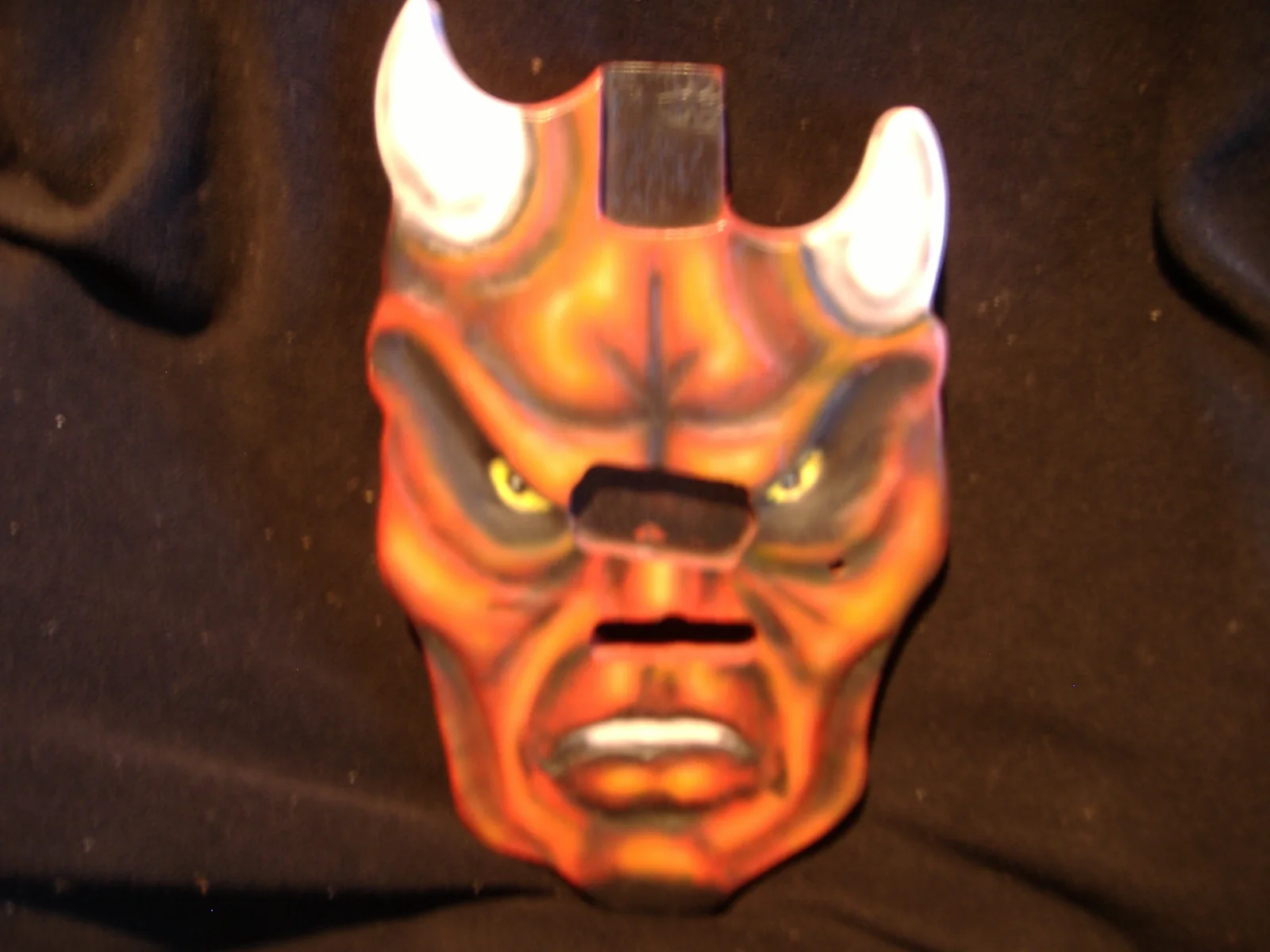
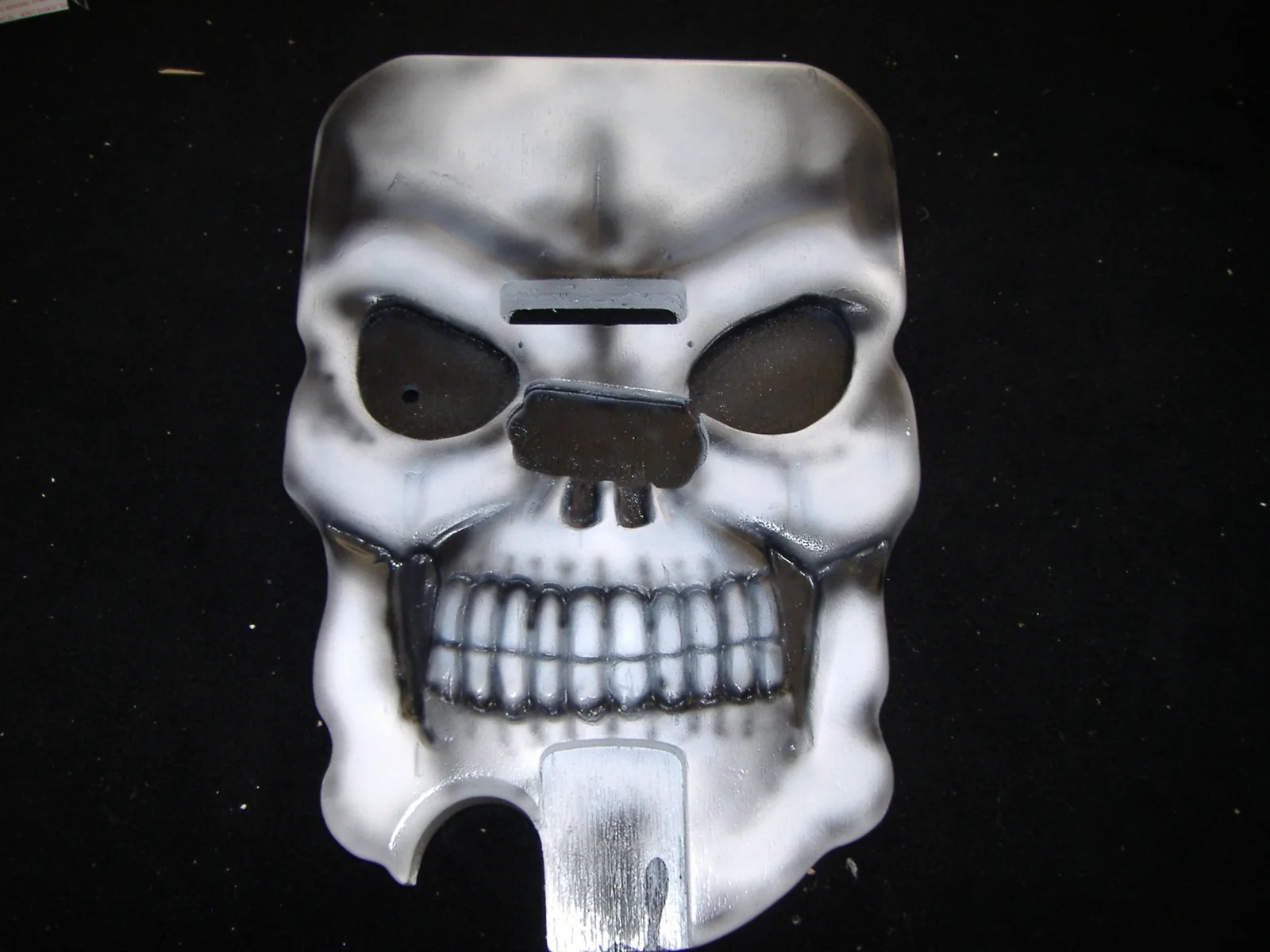
Sometimes the ugly practice piece is only ugly because you have not reached the thing it was preparing you for yet.
The commission
A guitar that looked as though it came off a cursed ship.
Around 2015, I was talking with Robby Lochner, who already owned a couple of my guitars, about making a guitar for Jack Russell to use as a stage prop. I spoke with Jack about it, and he was excited to see what I would come up with.
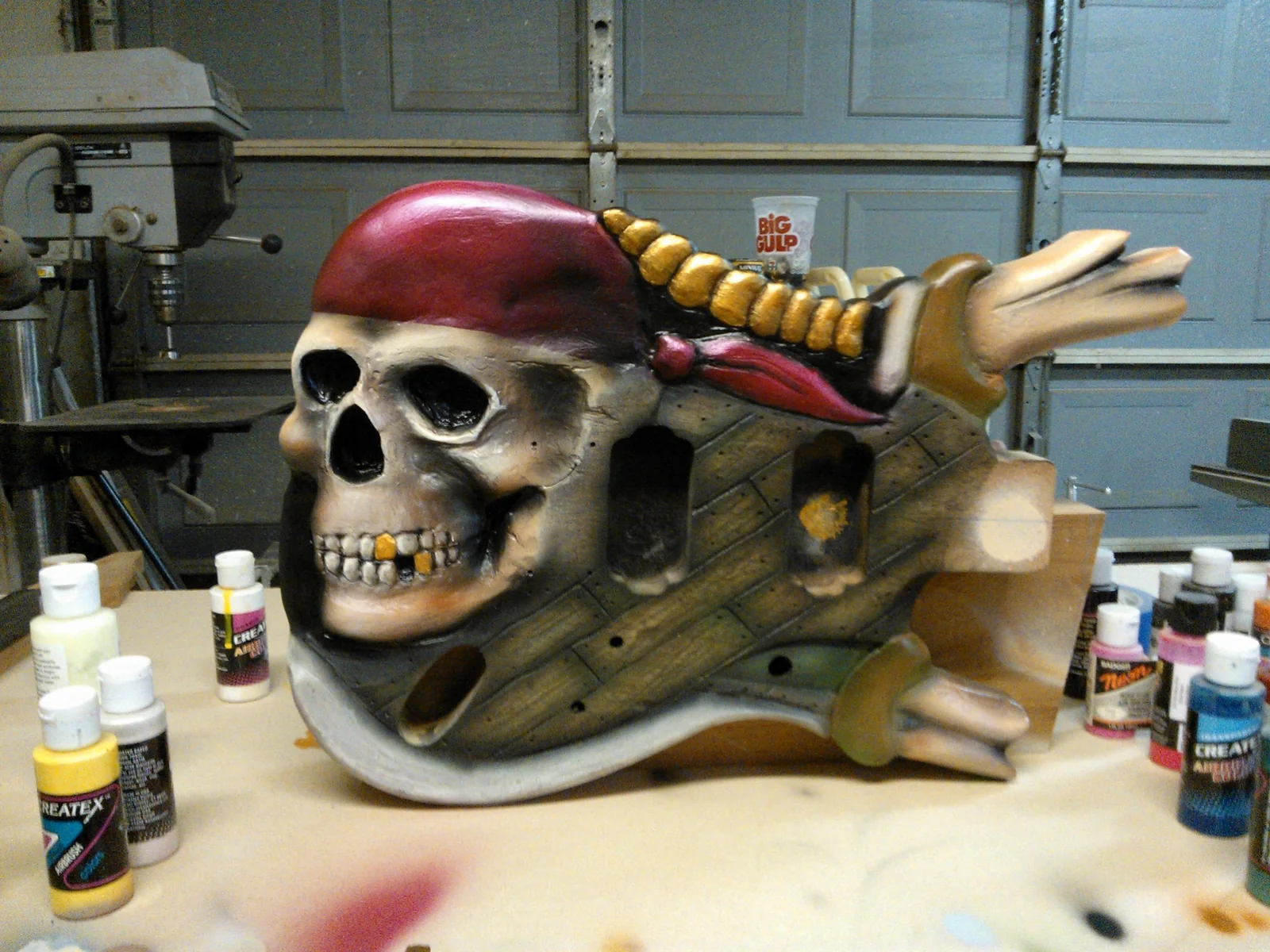
His version of Great White had a pirate theme, so the guitar needed that same world around it. Pirates of the Caribbean was the obvious visual reference at the time. I was not trying to copy one of its props. I was trying to build the guitar that might have been found in the hold of the same cursed ship.
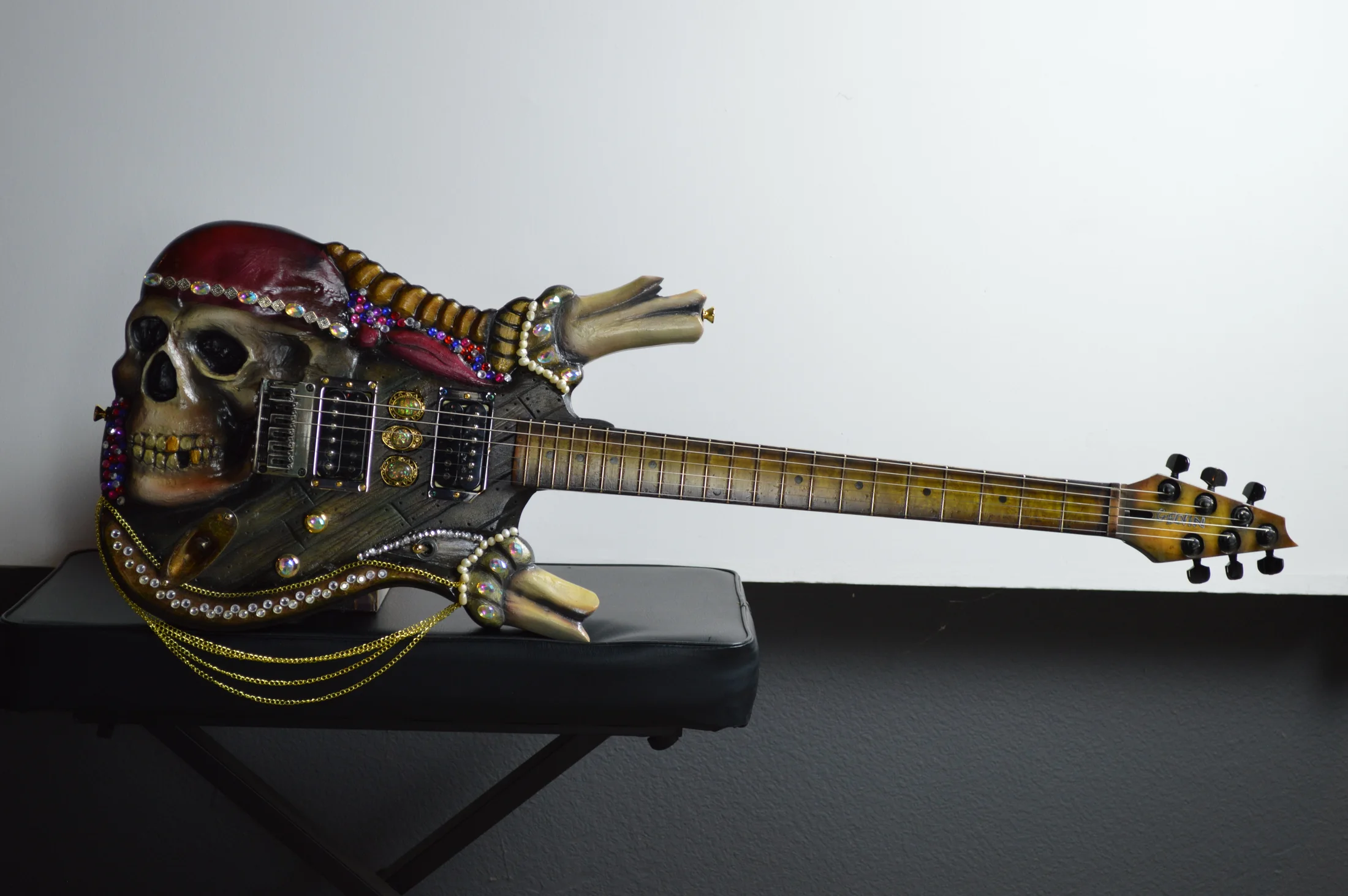
I drew several versions. Somewhere among roughly twenty thousand photographs, those drawings probably still exist. The design I settled on was a skull wearing a handkerchief and surrounded by loot—or, to use the correct pirate terminology, booty.
The treasure came from wherever treasure could be found.
I went to Michael’s looking for beads and charms. I went to Walmart looking for anything that could pass for coins, jewelry, chains or something stolen from a person who no longer needed it. Anything that helped sell the illusion was fair game.
I carved the surface to resemble wooden planks from the side of a ship and stained it to make the body look old, dirty and used. The skull, hands, rope, cloth, pearls, chains and fake riches had to read as one object rather than a guitar with decorations glued to it.
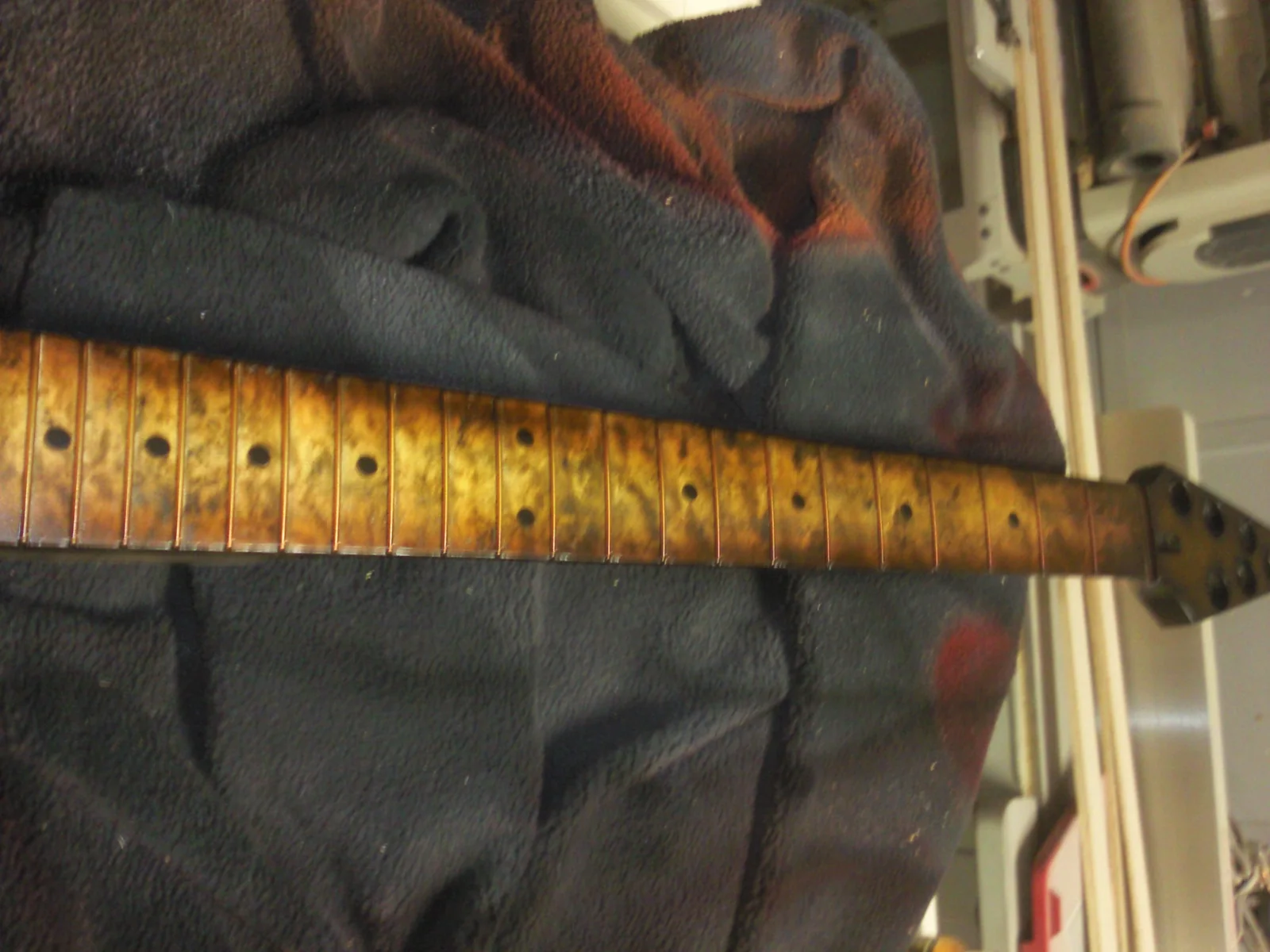
The body and neck were mahogany. I aged the neck the same way I had on Rayko Dig’s steampunk guitar so it would not look like a clean new neck attached to an old pirate relic. Acrylic paint did most of the visual work.
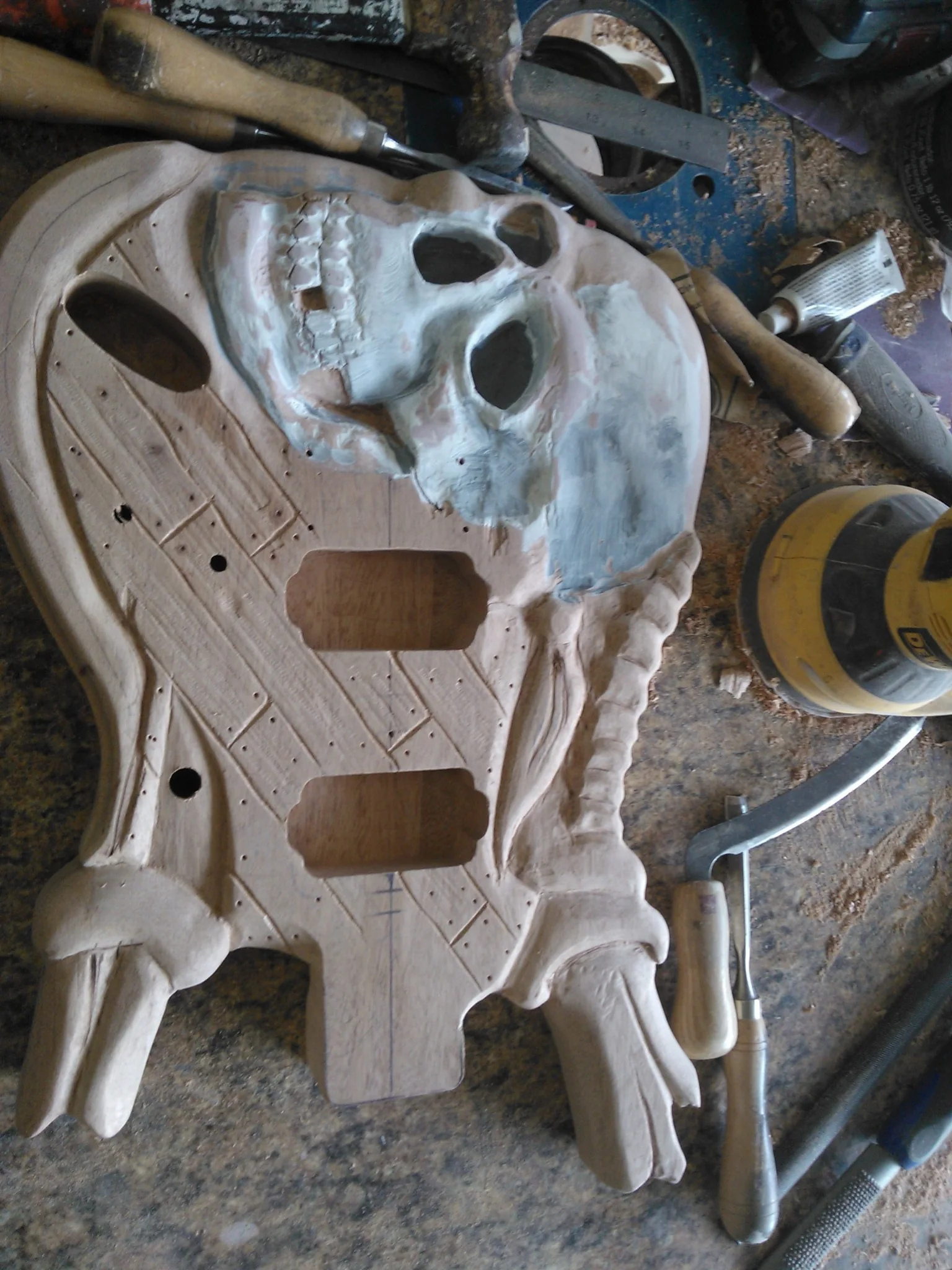
It was a stage prop that still had to be a guitar.
I installed a set of my 1984 pickups. The bridge pickup was designed around the kind of sound associated with Eddie Van Halen, while the neck pickup leaned toward Billy Gibbons. The body was loaded with sculptural work and stage decoration, so it did feel a little strange to play. That was the compromise. Normal guitars do not have a skull, pirate treasure, ropes, chains and carved hands hanging from them.
Jack and Robby both liked it, and it did what it was supposed to do under stage lights. In the video below, Robby Lochner uses the guitar while teaching the solo to “Rock Me.” That is probably the best proof that it was more than a prop. Strange or not, it still worked as a guitar.
The carving finally had somewhere to go.
I had not done much sculptural carving after those early eBay guitars. A little of it returned on Rayko’s steampunk build, and then the Jack Russell guitar demanded all of it. The old demon and skull were crude attempts to make scrap wood interesting. Years later, the same instinct became a complete visual concept for a working stage instrument.
Those first guitars were not hidden masterpieces. They were exactly what I said they were: junk made quickly from leftovers. But they taught my hands something useful. The pirate guitar was where that ugly practice finally collected its payment.