Featured custom builds · Around 2012
Two guitars for Rayko Dig.
Rayko Dig of Lolita Dark owned two Gelvin guitars. One was a machine from a world that never existed. The other was one of my Model 2359s finished with fabric cut from an actual kimono. They looked nothing alike, but both were built around the same idea: the guitar should belong to the performer, not the catalog.
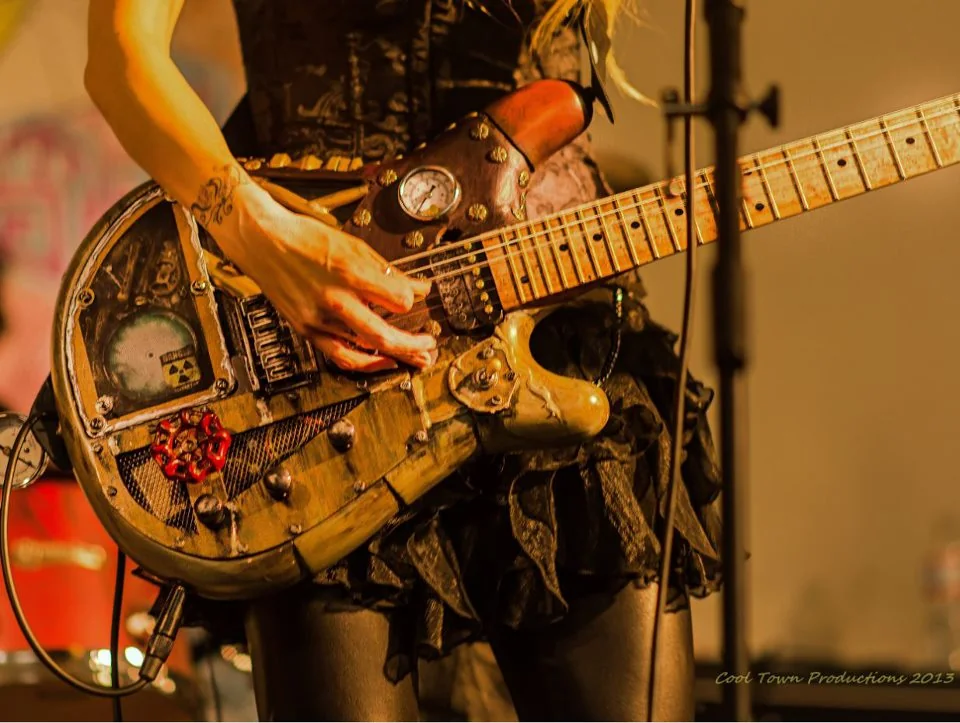
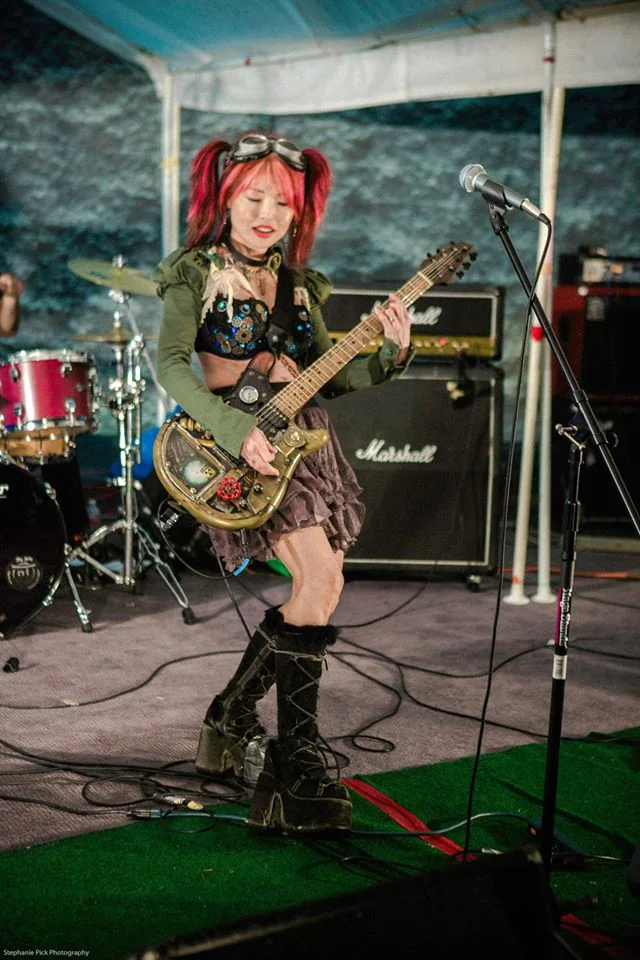
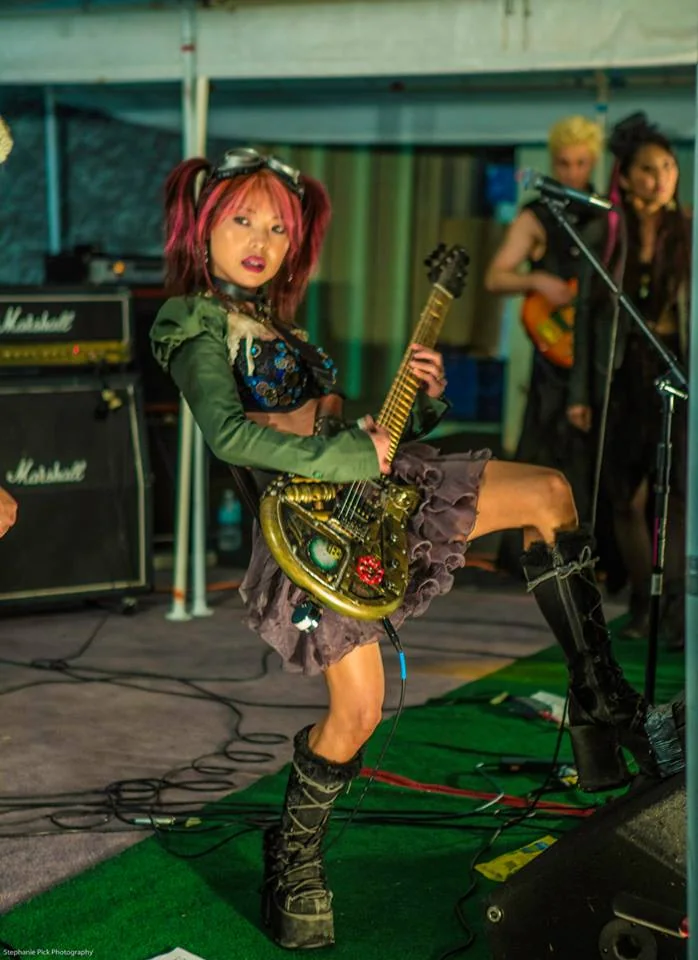
The steampunk guitar
I had to look up what steampunk was.
Rayko told me she had a concept for a band she was getting ready to start and wanted a steampunk guitar. The concept for the guitar itself was one hundred percent mine, but I did not know what steampunk was. I looked it up and remember thinking, “This is Sherlock Holmes with a touch of The Wild Wild West and The Time Machine.”
I did not know exactly what I was going to do yet. I only knew it needed pipes, gauges, valves, machinery, and some kind of forbidden or taboo energy source that probably should not be trusted.
Real metal pipes would have created weight and electrical problems, so I turned the pipe shapes from wood on a lathe and painted them to look like aged metal. The body is a combination of mahogany and alder, which is not a normal recipe. I knew the lower half would become heavier after the electronics went in, so I used the lighter, alder, which was lighter and easier to carve, where the added hardware would concentrate the weight.
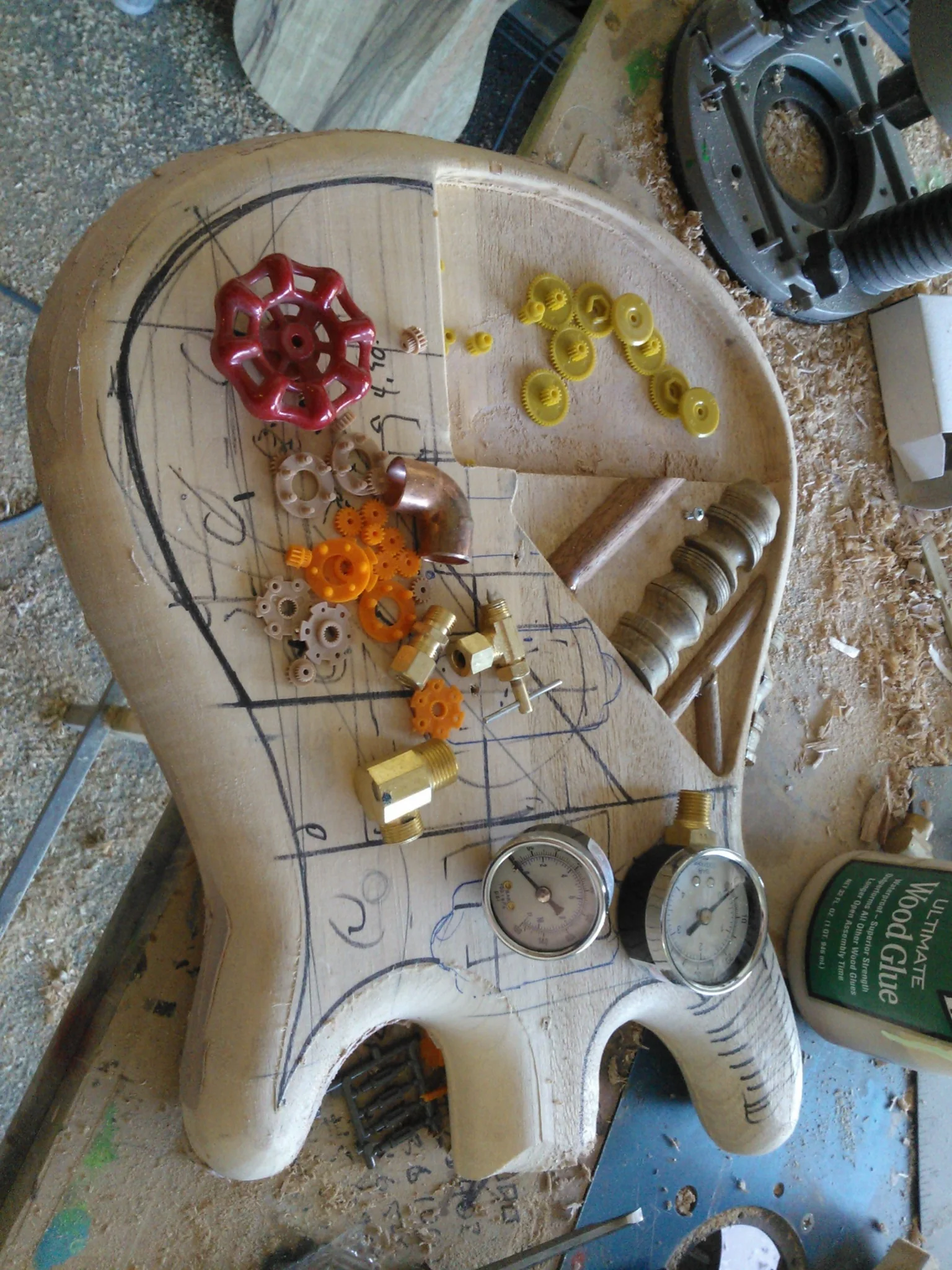
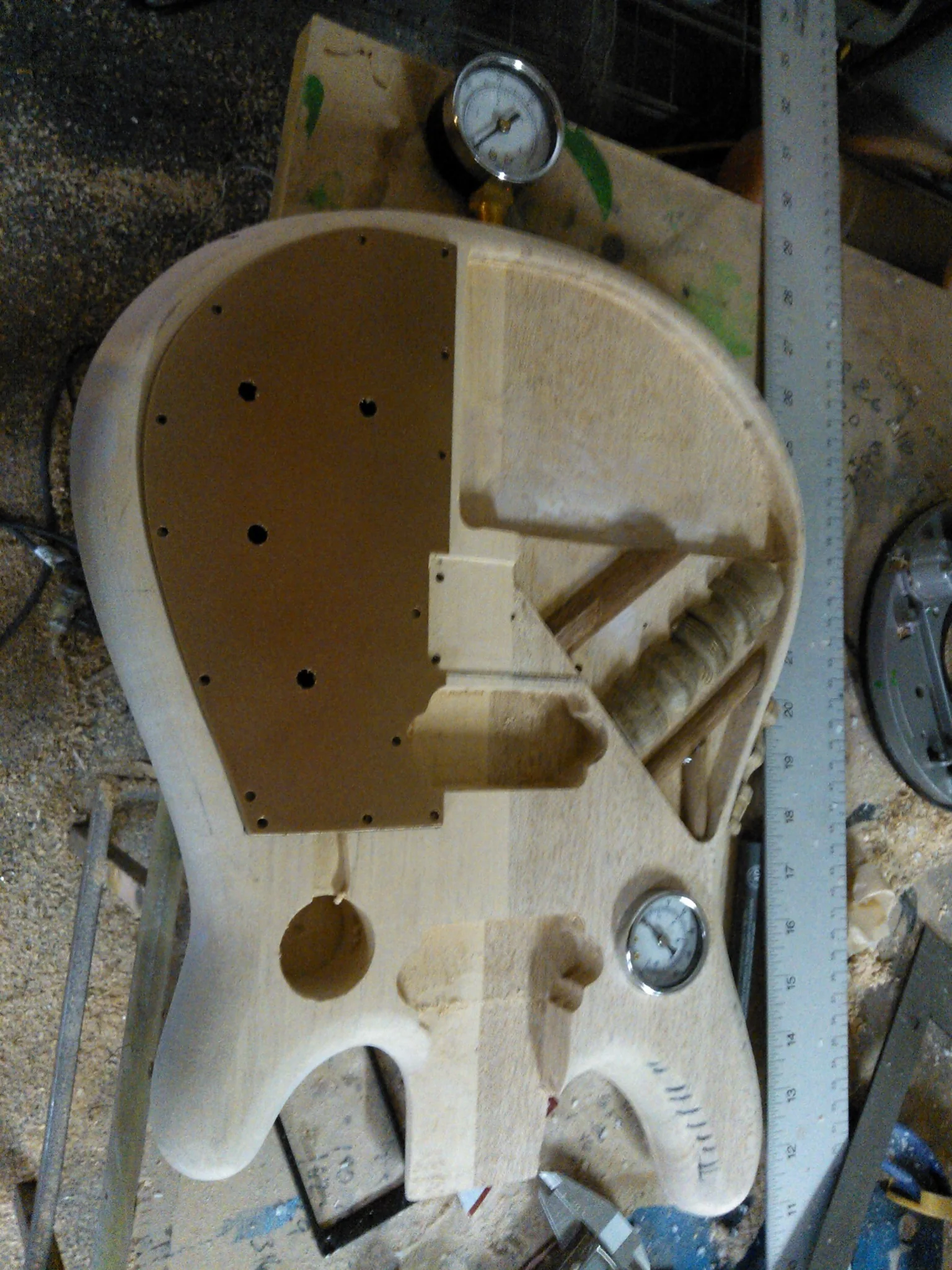
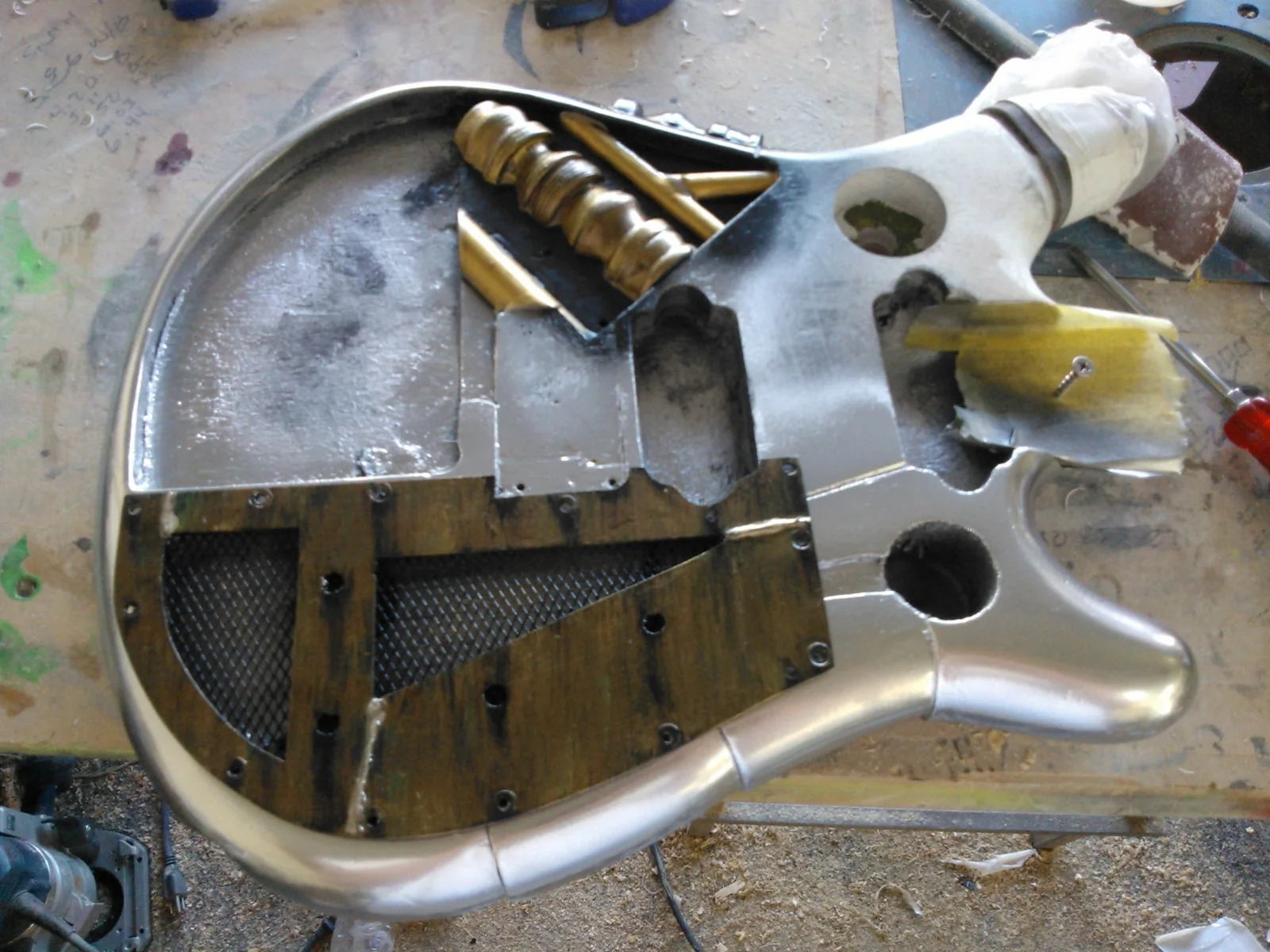
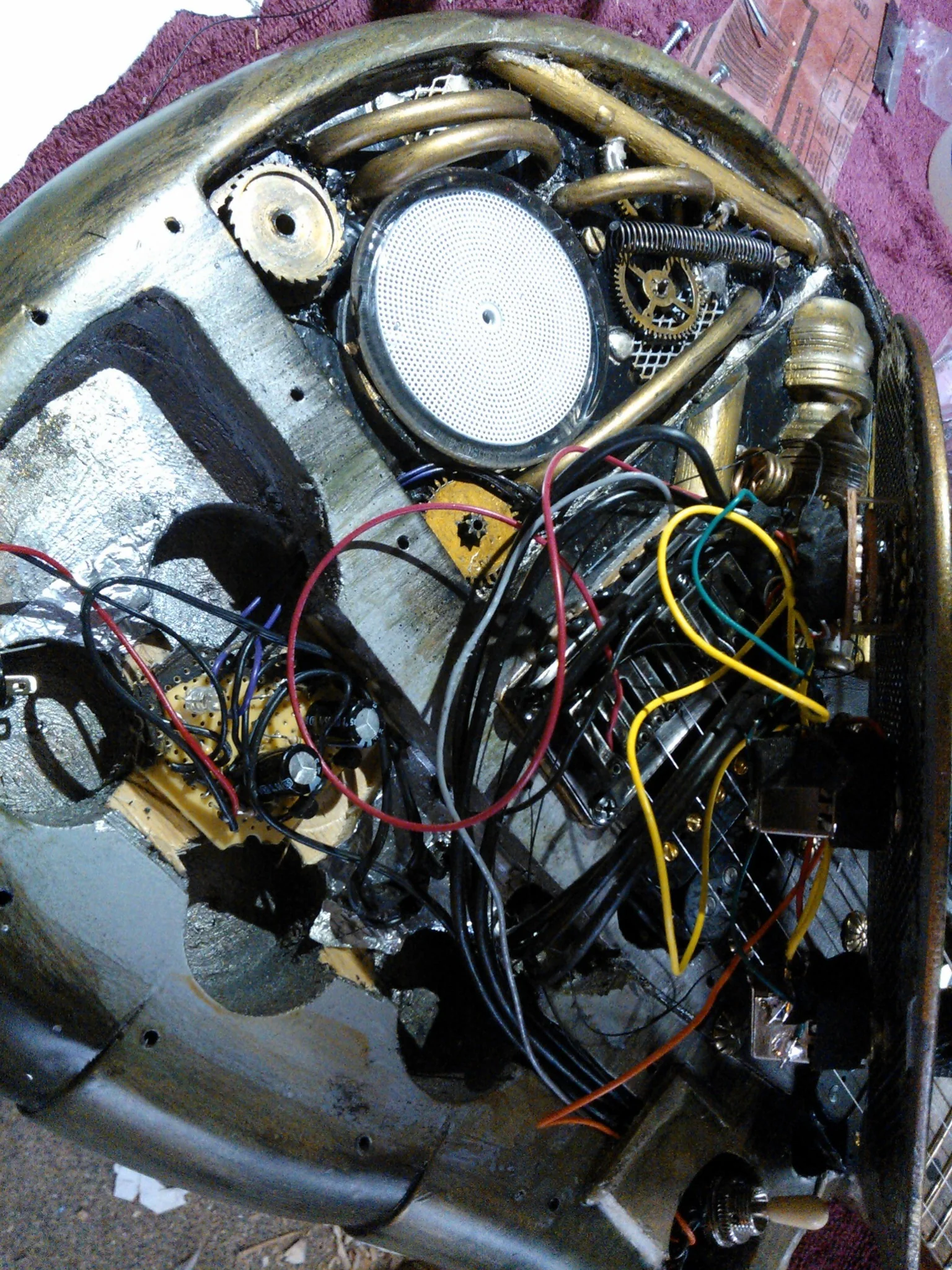
The machinery is theater. The controls are not.
The lights, gauges, gears and reactor are there to sell the illusion. They make the guitar look as though it is harnessing an energy source nobody was supposed to discover. The knobs and valve replace ordinary guitar controls.
Turning the red faucet valve changes the settings of my VIP pickups. The guitar has six pickup options along with treble bleed, high pass and low pass filters, coil splitting for single coil operation, and standard tone and volume. The lights and theatrical system run from a 9 volt battery.
The back is leather. Gauges became strap buttons. The birds eye maple neck was painted with candy colors and aged until it looked much older and dirtier than it really was. Ordinary parts would have broken the illusion, so even the pieces most people never notice had to belong to the same machine.
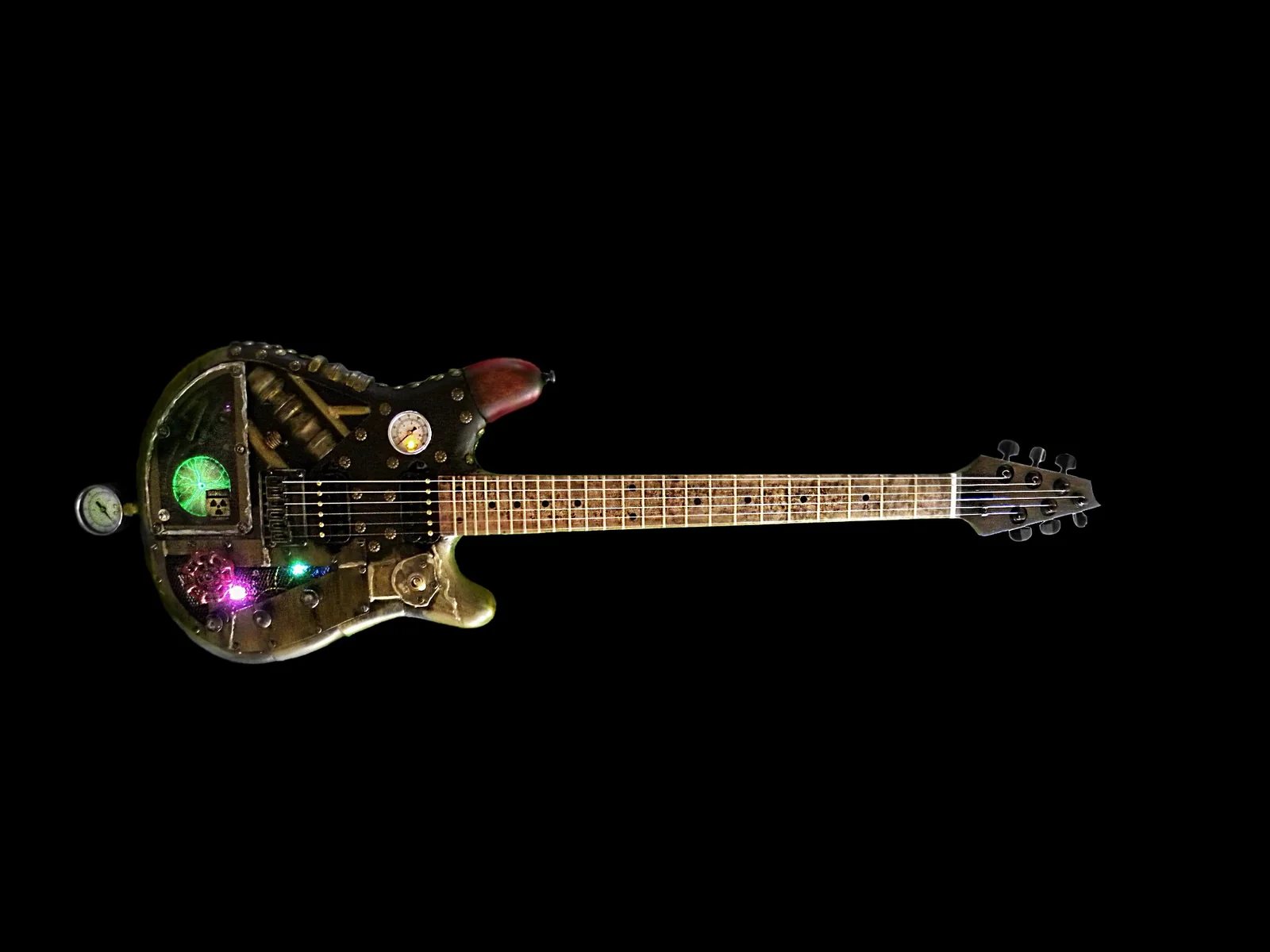
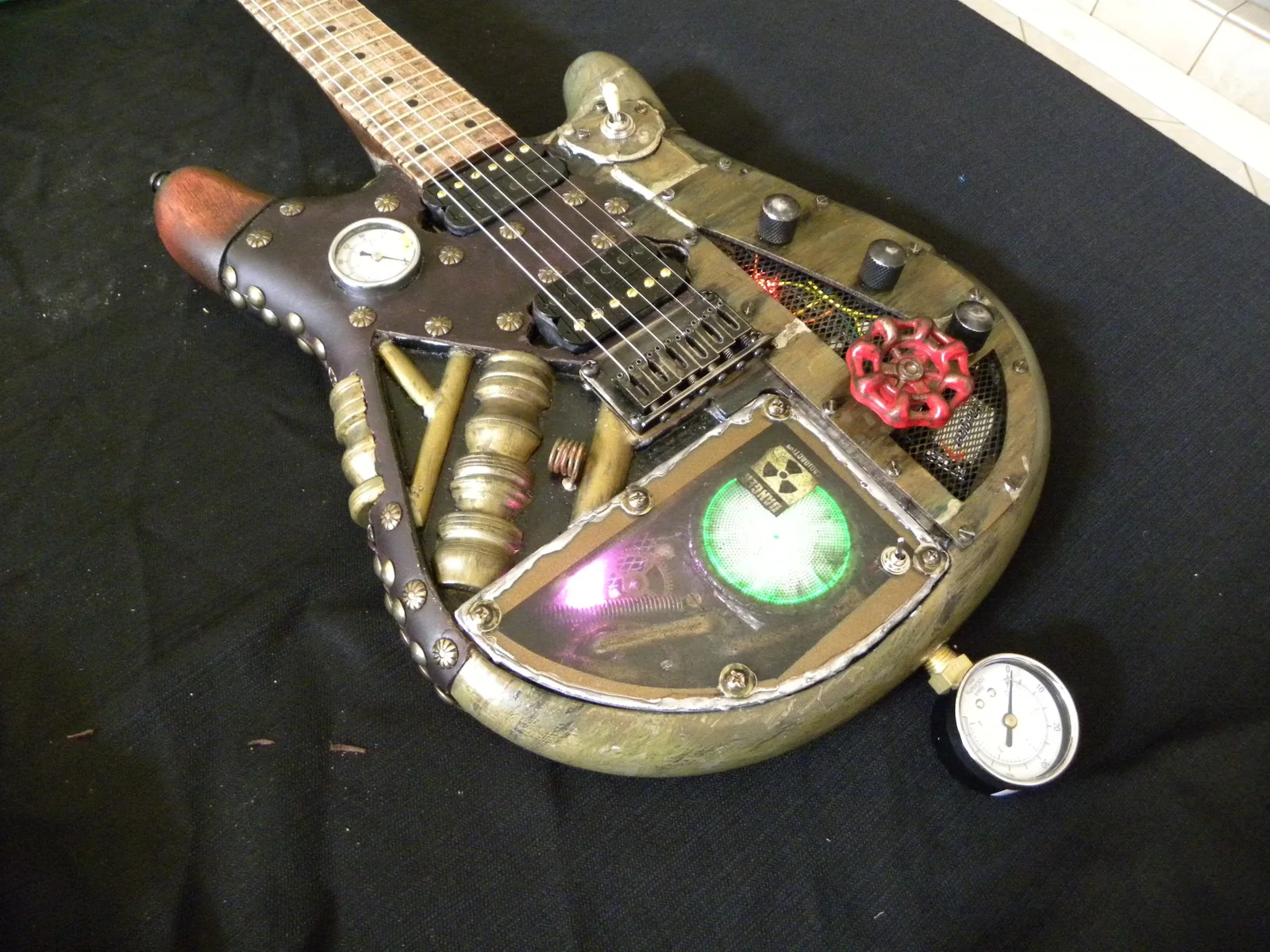
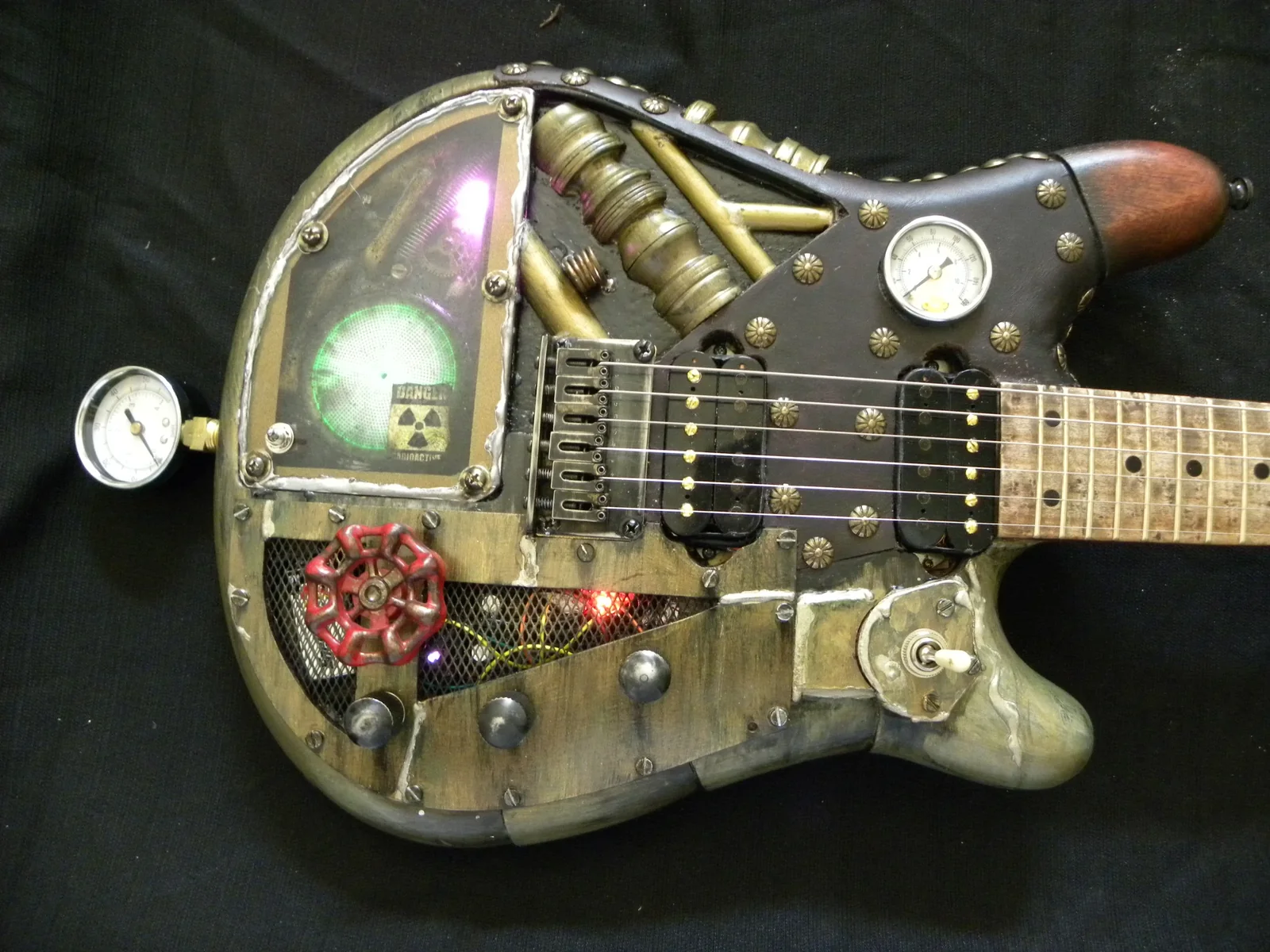
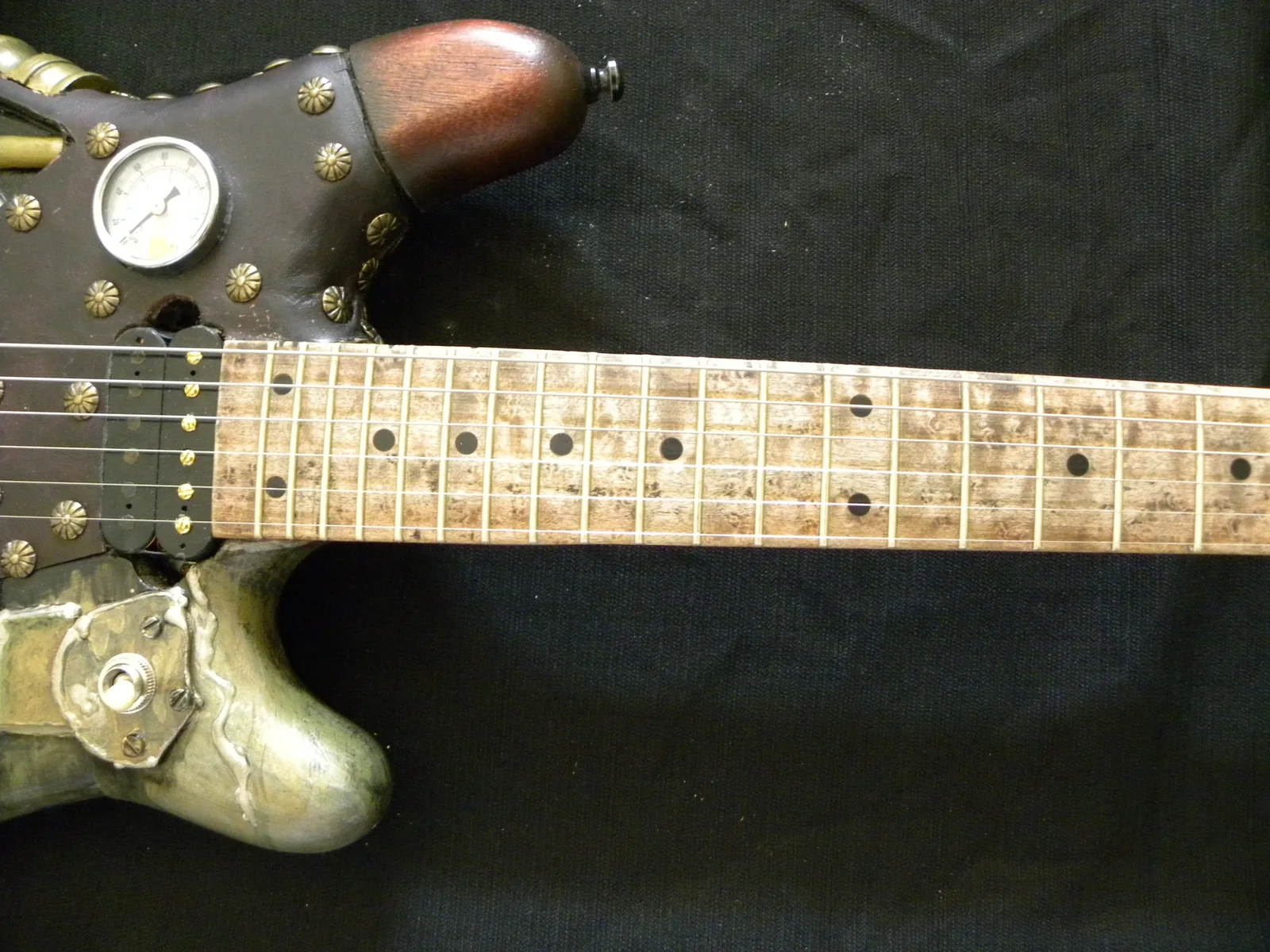
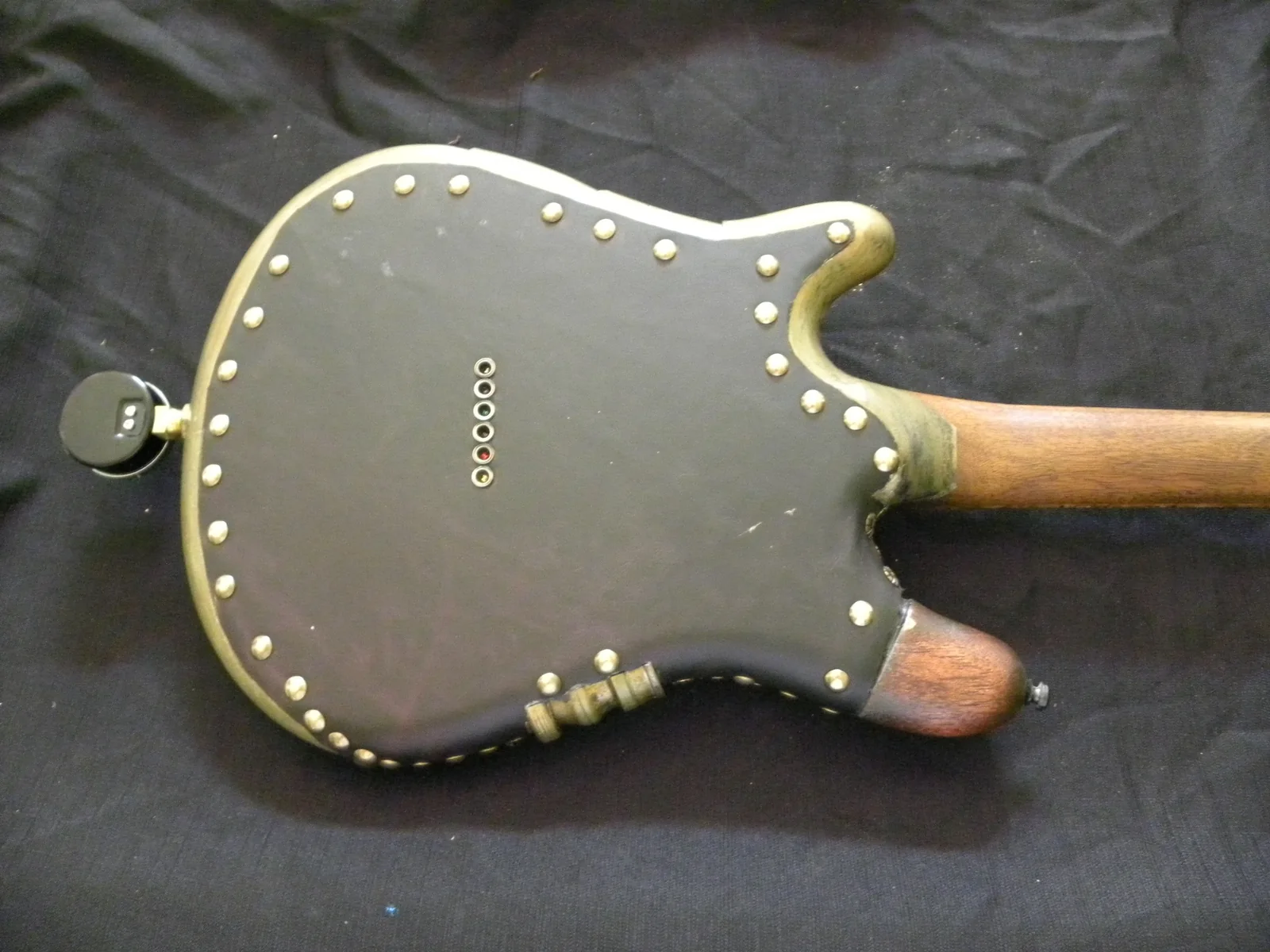
Nothing about the build was especially hard for me. The hard part was giving it to her because I really liked it. Rayko used it onstage, in videos and in photo shoots. Search for steampunk guitars now and you will see ideas that look familiar. It is not the first time I have watched one of my designs travel farther than my name did. Imitation is the sincerest form of flattery. That is what I told my wife when she recognized one of my old paint techniques on a guitar from a major manufacturer years after I taught the process on YouTube.
The kimono Model 2359
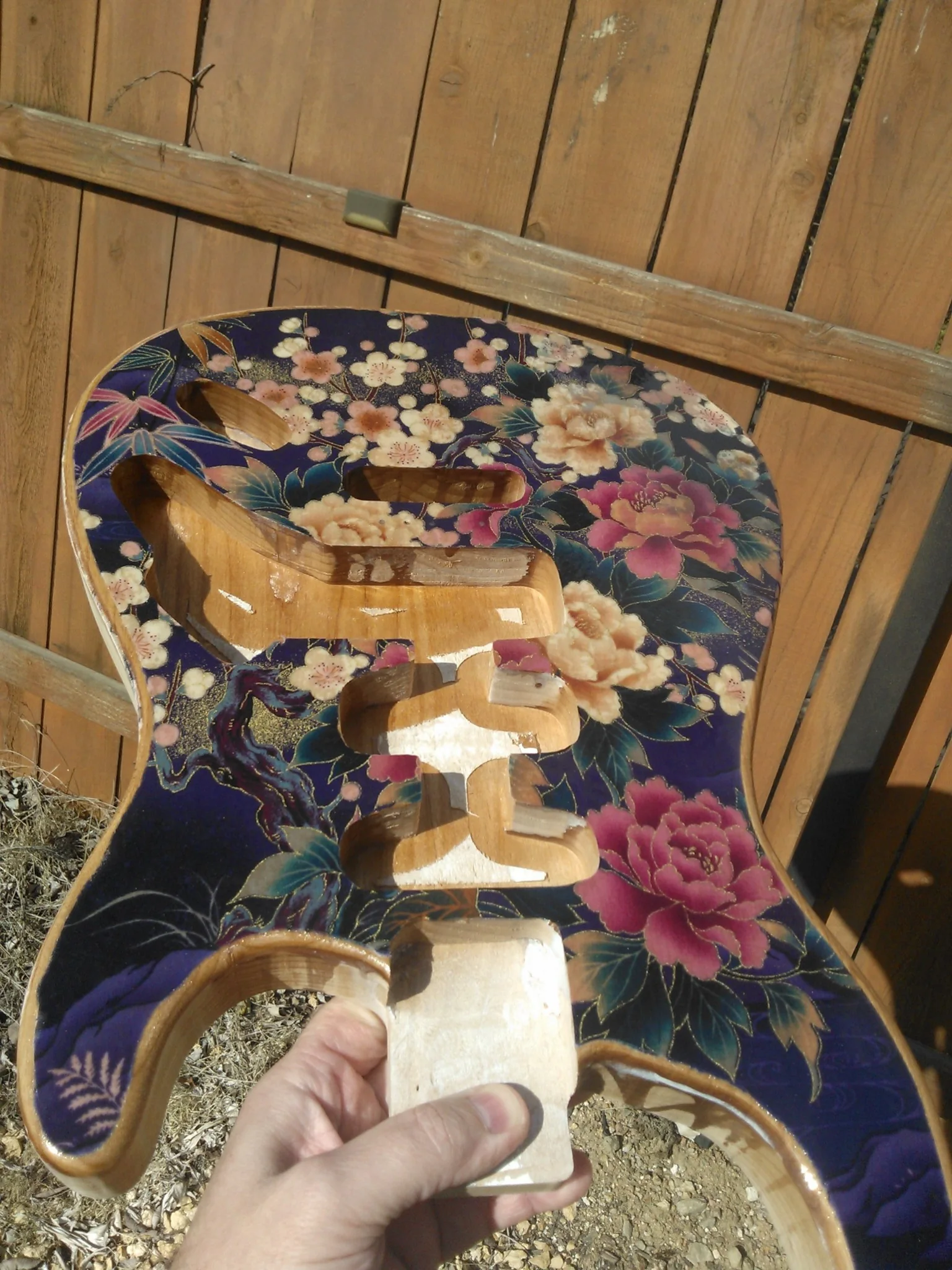
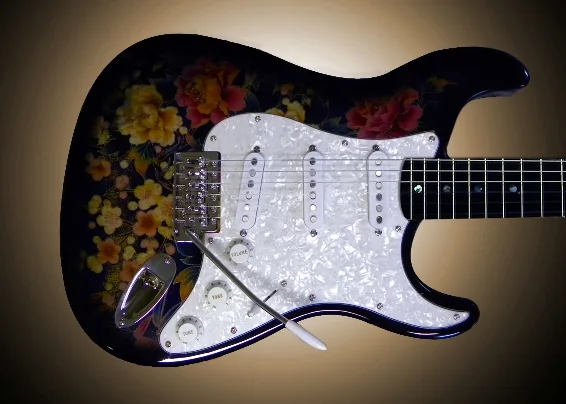
Rayko’s other Gelvin guitar was one of my Model 2359s. The floral pattern was not painted, printed or copied. I took an actual kimono apart and built the fabric into the finish of the guitar.
The material had to be worked around the contours, pickup routes, bridge cavity and carved sections of the body, then sealed until it became part of the surface instead of fabric sitting on top of wood. Once the guitar was assembled, most people saw a floral finish. The construction photograph shows what it actually took to get there.
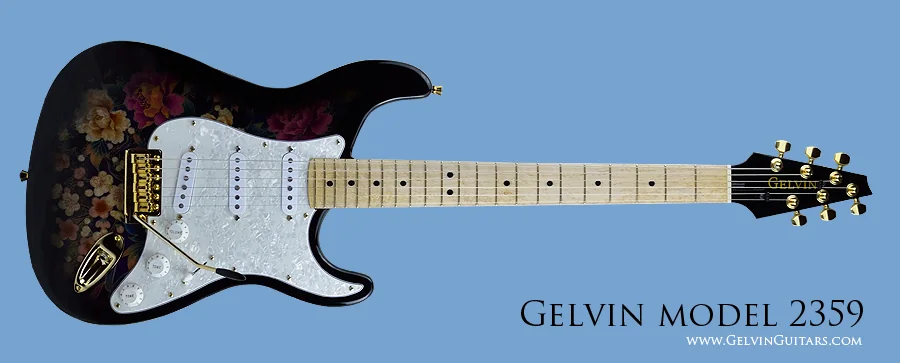
Built to leave the shop.
These were not display pieces pretending to be guitars. Rayko played the steampunk guitar live and used it in videos and photo shoots. The visual idea had to survive cables, straps, stage lights, sweat, movement and the ordinary abuse of performance. If the art makes the instrument unusable, it is not a successful guitar. It is a sculpture with strings.


What these two guitars show
The steampunk guitar began with a genre I had to research and became a complete fictional machine. The 2359 began with a real piece of clothing and turned the material itself into the finish. Custom did not mean choosing a color from a chart. It meant finding a way to build the performer into the instrument.